Open post
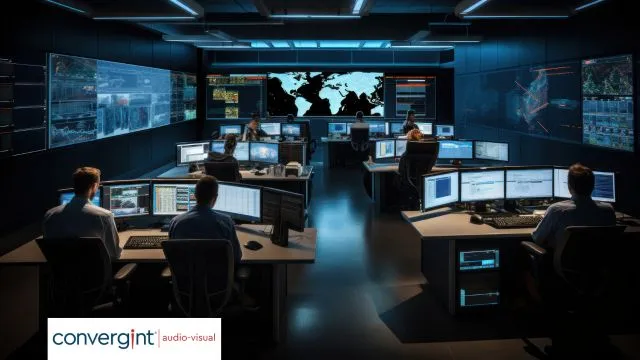
Futuristic command-and-control room

Enhancing Command-and-Control in Critical Operations with AI-powered AV Solutions

A command-and-control room (C&C room) is the operational epicentre for many organisations. This centralised facility enables them to oversee complex, mission-critical activities, make rapid decisions, and mitigate risks and threats before they can adversely impact the facility. But to deliver on these promises, clear coordination and communication between C&C personnel are essential. And to enable such communications, integrated, AI-powered Audio Visual (AV) systems are vital.

A well-integrated AV system enables C&C teams to effortlessly manage, control, and process the audio and visual inputs from diverse sources. By seamlessly combining digital displays and audio solutions with state-of-the-art AI analytics, a unified AV system enables operators to maintain 24/7 shared situational awareness. Such awareness empowers them to make informed, timely decisions and ensure the organisation’s operational continuity and long-term success.


AV Systems for Command-and-Control Rooms: Then vs. Now.

For decades, critical service providers, businesses, government agencies, the military, and even for-profit businesses have maintained C&C rooms to facilitate coordination among different departments, and to streamline crisis management and emergency response.

However, traditional C&Cs relied on a few security systems like CCTVs and intrusion detection that consisted of stand-alone hardware components. These components only performed a single dedicated task and didn’t “talk” to each other, limiting the insights available to C&C operators. These personnel also had to deal with multiple screens, various audio sources, and a constant influx of diverse data streams, causing confusion and slowing down decisions and responses.

For modern organisations dealing with new challenges and evolving threats, old-fashioned, “componentised” C&C rooms with limited AV capabilities and system connectivity are inadequate to maintain situational awareness and ensure resilient security. To achieve these objectives, organisations need 24/7/365 surveillance monitoring, efficient communication, and fast, data-driven decision-making, which is only possible with a modern C&C room equipped with a state-of-the-art, unified AV system.


Key Components of Modern, Integrated AV Systems.

High-impact AV systems combine video wall displays, interactive touchscreens, video conferencing, audio conferencing, and distributed audio systems with control systems and real-time data visualisations. These integrated systems facilitate enhanced, real-time communication and collaboration, vital to and ensure the organisation’s smooth functioning in any situation.

Multi-source, large-format video displays provide an overview of critical data, improving operators’ monitoring and real-time decision-making capabilities. Interactive touchscreens enable faster data manipulation and provide intuitive control over situations and crises. These visual systems connect to multiple systems, like video surveillance cameras and video conferencing systems, to display a huge range of visual information in digestible formats, making it easier to understand and act upon as needed. An IP-based video management system (VMS) is another key element of today’s C&C rooms. This holistic system enables C&C teams to easily manage and view live feeds from multiple sources, providing crucial inputs for surveilling, controlling, and safeguarding high-security environments.

Distributed audio systems are also valuable to ensure high-quality, clear, and consistent communication, especially during high-stakes situations. Modern C&C rooms also leverage AV-over-IP solutions that provide enhanced flexibility and scalability for seamless transmission of AV signals over existing and growing networks.

A high-tech command centre is incomplete without an integrated control system (ICS). These systems provide centralised, visually-rich interfaces that allow operators to manage multiple AV devices, lighting, and environmental controls from a single station. The ICS thus facilitates enhanced and effortless control over operations and security infrastructure.

Modern and effective C&C rooms also rely on redundant systems. Redundant components, power, and cooling provide backup for critical AV functions and ensure reliable, fail-safe operations even in challenging conditions.


The Power of AI-enabled AV Solutions for Uncompromising Command and Control.

AI is transforming C&C operations and value creation. Sophisticated AI-powered AV systems aid C&C operators in fast data analysis and decision-making. These capabilities can often determine whether an organisation sails through a crisis or succumbs to it.

AI also helps to automate routine C&C tasks. By autonomously managing many of these activities, it saves valuable time, reduces costs, and leaves operators free to focus on strategic, high-value tasks where their abilities are truly required.

AI-powered AV systems analyse complex AV datasets and provide real-time data visualisations to enhance the situational awareness of C&C operators. They also raise automated alerts and generate actionable insights that enhance team collaboration and operational coordination. These real-time, timely insights also enable operators to prevent incidents before they escalate and avoid costly errors during critical moments.

Another great advantage of AI-powered systems: predictive maintenance capabilities! These solutions can autonomously and continuously monitor system health and predict potential failures, thus helping to reduce system downtime and maintenance costs.


Powerful, AI-enabled AV for Command and Control: Why Systems Integrators are Crucial.

The true power of AV systems lies in their ability to seamlessly integrate multiple systems and integrate with existing infrastructure. Integrations allow them to communicate seamlessly with existing security, IT, and operational systems, enhancing operational capabilities and providing unified control room experiences. Effective, integrated AV systems are also scalable and adaptable, allowing for future upgrades and expansion without requiring major overhauls and also aligning with the organisation’s evolving C&C needs and goals.

However, designing and deploying high-performance AV systems and integrating them into the business ecosystem can be a mammoth undertaking for organisations. Ongoing monitoring, maintenance, and asset management can also be complex and time-consuming. A successful and reliable systems integrator would take care of all these aspects, so organisations don’t have to worry about the nitty-gritties and can instead maximise the value of their AV and C&C investments.


Conclusion.

MVP Tech – Convergint is proud to design and integrate cutting-edge, AI-enabled AV solutions for organisations throughout the Middle East. Our unified offerings provide advanced automation capabilities and ensure clear, timely communications to ensure better situational awareness, streamlined operations, and fast, accurate decision-making.

Our experienced tech teams design, customise, and install high-performance offerings to suit any organisation’s specific needs. We also provide maintenance support, on-site assistance, and remote monitoring to ensure that the solution continues to meet their expectations in a fast-evolving business landscape.

To know more about our comprehensive AV solutions, Visit our page:

Know More

Open post
Connected Security Layers.

Optimising Security: Convergint’s Expert Approach to SOC Design and Implementation

Team working in a global data center

In an increasingly complex and dynamic security landscape, the importance of a state-of-the-art Security Operations Centre (SOC) cannot be overstated. An SOC serves as the nerve centre for monitoring, detecting, and responding to security threats in real-time. It is where crucial decisions are made to protect assets, people, and infrastructure. Convergint understands the critical role of an SOC and offers a comprehensive suite of solutions to design, build, and implement SOCs that meet the highest standards of safety, efficiency, and technological advancement.


Comprehensive SOC Infrastructure Development.

Convergint’s approach to building an SOC begins with a robust infrastructure designed to support continuous 24/7 operations. The process is divided into two phases.

Phase I: Preparation of Infrastructure

In the first phase, the focus is on preparing the infrastructure. High-quality video wall displays are at the core of every SOC’s visual monitoring capabilities. These displays, tailored for uninterrupted operation, ensure optimal visibility and clarity. They are supported by scalable video wall controllers and modular structures, including encoders and decoders, to efficiently manage multiple inputs and outputs. Audio clarity is another critical aspect, and Convergint addresses this by installing Digital Signal Processing (DSP) amplifiers and line array speakers, ensuring even sound distribution and superior audio quality throughout the SOC. This setup is crucial for effective communication and enhancing situational awareness.

The design also prioritises operator comfort and efficiency through the installation of ergonomic operator consoles. These consoles are adjustable, allowing operators to sit or stand as needed, reducing fatigue during long shifts. They are also equipped with features like cable management and CPU trays to maintain a clutter-free workspace. Additionally, the interior design of the SOC is meticulously planned with comprehensive solutions tailored to create an environment conducive to focused, high-performance operations.

Phase II: PSIM Application Implementation

In the second phase, the focus shifts to implementing the Physical Security Information Management (PSIM) application, which integrates all the SOC’s security systems into a single platform for centralised management and control. Convergint handles the installation and configuration of the selected PSIM application, ensuring it is tailored to the client’s specific needs. The PSIM software brings together various security systems—such as IP CCTV, access control, fire alarm systems, perimeter and intruder detection, and more—into a unified interface. This allows operators to manage and respond to incidents from a single location, streamlining operations and enhancing response times.

To ensure the system’s effectiveness, Convergint provides comprehensive training for operators. This training equips staff with the knowledge and skills needed to fully utilise the PSIM system, effectively manage incidents, and maintain continuous and efficient SOC operations.


Challenges and Solutions in SOC Implementation.

Building an SOC presents a unique set of challenges. Convergint expertly navigates common hurdles such as display alignment, maintenance accessibility, and the necessity for specialised mounts during installation. Our solutions are enhanced with advanced capabilities like automatic colour calibration, ensuring consistent display quality over time. Convergint’s expertise in SOC development is rooted in a profound understanding of the technological and operational demands of modern security environments. We provide bespoke, end-to-end solutions, underpinned by a steadfast commitment to quality, safety, and efficiency. Every SOC we design and build is engineered to meet the highest standards, delivering robust protection and operational excellence.


About Convergint

Committed to service excellence, Convergint continues to set the bar for quality and innovation in the security and audio-visual industry. Contact our Asia Pacific team of experts today to learn more about how Convergint can provide reliable, world-class solutions and services tailored to meet the needs of your business.

Contact Us

Open post
Intelligent traffic system monitoring city traffic

The Role of Intelligent Traffic Systems in Modernizing Urban Infrastructure

How modern cities can overcome security, safety, and traffic challenges with Automatic Number Plate Recognition (ANPR) and advanced surveillance systems.

Published in Security Middle East Magazine

Fact: the world of today is a lot more urbanized than it was just a few decades ago. The United Nations Human Settlements Programme predicts that the number of urban residents will increase globally from 56% in 2021 to 68% in 2050.

Unfortunately, such increasing urbanization creates numerous traffic and security challenges that affect citizens’ quality of (urban) life. And the complexities of these unprecedented challenges will only grow in the coming years.

Fortunately, city planners, municipal authorities, law enforcement agencies, and other decision-makers can overcome – or at least mitigate these challenges. The key is to leverage cutting-edge technologies like Automated Number Plate Recognition (ANPR) and Artificial Intelligence – powered surveillance.

This brief article explores how cities can leverage these technologies to elevate urban infrastructure. It also highlights the benefits of partnering with expert technology providers and systems integrators like MVP Tech – Convergint.


What Makes ANPR a Game Changer in Intelligent Traffic Solutions?

Many modern cities are characterized by large human populations and heavy vehicular traffic. It’s not easy to manage the latter or ensure the safety of the former using traditional, human-dependent measures. Similarly, challenges related to level crossing monitoring, toll collection, vehicle fingerprinting, bus lane enforcement, speed limit enforcement, and parking management also require modern, intelligent technologies and solutions.

Intelligent, automated, data-powered ANPR systems help to mitigate these challenges. They automatically detect, read, process, and return various vehicle attributes, including number plates, models, year of make, dimensions, colours, and even speeds and journey times. More importantly, they intelligently and accurately translate this wealth of information into usable, actionable data that can be used by urban security teams, law enforcement agencies, transportation and infrastructure managers, and other stakeholders to enhance the efficiency and safety of their roads and cities.

The foundation of an effective, city-wide ANPR system is a network of high-res ANPR cameras placed in strategic locations throughout the city. These cameras swiftly and continuously capture images of vehicles and their number plates. Every camera includes a robust and powerful processor that processes the incoming input – often at the “edge” to reduce processing latency and quickly return accurate, comprehensive, human-readable insights to a centralized location, such as a command-and-control (C&C) center or data server. These insights are displayed on a user-friendly dashboard, where they support decision-making for a wide range of applications for modern-day cities.

Engineering-driven technology providers like MVP Tech – Convergint design intelligent, non-intrusive ANPR solutions with onboard video analytics that help build a smart, data-driven system for cities. Moreover, they ensure that each component can be easily integrated into a city’s existing IT environment to create a cohesive, high-performance, and cost-effective system. These multi-faceted installations and integrations ensure cost-effective installations and deployments, simplify operations, data management, maintenance, and upgrades, and effortlessly support a smart city’s evolving needs.


Applications of ANPR and Intelligent Surveillance Systems.

Different authorities across the Middle East and Africa (MEA) adopted the smart city solutions designed and deployed by MVP Tech – Convergint for traffic management. These integrated, secure, and agile systems combine ANPR and AI-powered surveillance to enable city traffic teams to monitor and manage traffic flows. Every deployment incorporates data analytics and AI capabilities to provide real-time and actionable insights that help them to identify traffic bottlenecks, reduce congestion, and enforce speed control measures to reduce the probability of accidents. Furthermore, our custom software integrations and centralized dashboards improve the efficiency of traffic management while simplifying its operations.

Would like to discover more Applications of ANPR and Intelligent Surveillance Systems?
Read our published Article in Security Middle East Magazine

Open post
two white security cameras in an all-white server room

Robust Data Centre Security Through Turnkey Solutions and Expert Security Systems Integration

How an integrated security ecosystem can boost data centre and organizational security

All modern organisations need a comprehensive, scalable, and secure data centre to operate, innovate, and achieve their goals. Strong security measures are essential to protect the data centre and ultimately, the organisation from a host of physical and cyber threats.

However, isolated, siloed measures are insufficient to deliver the level of security needed to truly safeguard modern-day data centres. For reliable, continuous, uncompromising protection, data centres require integrated security systems that are built, customised, and deployed by expert systems integrators like MVP Tech – Convergint MEA.

The Challenges of Data Centre Security

The threat landscape for data centres – and indeed, for organisations – has significantly expanded in recent years, driven by the emergence of new attack vectors, the increasing sophistication (and greed!) of cybercriminals, and the easy availability of new attack weapons. The increasing complexity of data centres also makes them vulnerable to many kinds of threats – both physical threats like unauthorised access, theft, vandalism, sabotage, and natural disasters, and cybersecurity threats like data breaches and cyberattacks.

But security is not the only challenge for organisations. Compliance is also a complex consideration. Today’s organisations must comply with a host of standards and regulations, many of which include stringent and often confusing requirements, particularly around security. As a result, many companies struggle to understand these requirements, increasing the risk of non-compliance as well as the risk of attack.

A comprehensive, well-integrated security infrastructure can help companies to mitigate threats and minimize their potential impact on data centre operations and organisational health. A strong security ecosystem is also vital to meet the requirements mandated by various regulations, and thus achieve compliance and avoid non-compliance costs.

Enhancing Data Centre Security with an Integrated Security Ecosystem

A robust and effective security ecosystem for data centres incorporates strong physical defences like biometric access control systems, surveillance systems, AI-enabled video analytics, and strong cybersecurity controls like firewalls, antivirus software, and endpoint detection and response (EDR) platforms. These defences are tailored to the organisation’s threat landscape, providing the best possible protection from all kinds of threats.

Moreover, the measures are seamlessly integrated into a unified, centralised hub, providing more proactive and holistic threat protection and improved incident response. An integrated system provides a unified view of security across the data centre plus centralised command-and-control, allowing security teams to quickly identify and address security gaps before they can be exploited by threat actors. It also simplifies security policy enforcement and regulatory compliance, and helps to ensure operational continuity and data integrity in the event of an adverse event.

A well-integrated, tailored security ecosystem with AI-enabled analytics capabilities provides even stronger security for a data centre. By automatically and continually analysing user and system behaviours, the system detects patterns and unearths anomalies that may indicate the presence of a threat. These actionable, real-time insights improve threat detection and mitigation, and help to strengthen the data centre’s security posture.

With real-time analytics, automation, and centralized control, human resources are no longer wasted in repeatedly resolving common security issues. Instead, the system itself will automatically address many problems, leaving staff to focus on other higher-priority issues. Integrated, automated, AI-based systems also simplify data centre security management, enhance its overall operations, and ultimately, improve its ROI.

The Key to Secure, Sustainable Data Centres: Turnkey, Integrated Security Solutions and a Reliable Technology Partner

Would you like to continue reading?

Read our full article on International Security Journal Magazine.

Read Full Article

Open post
Intrusion Systems. Detect early. Respond fast. Stay ahead of threats.

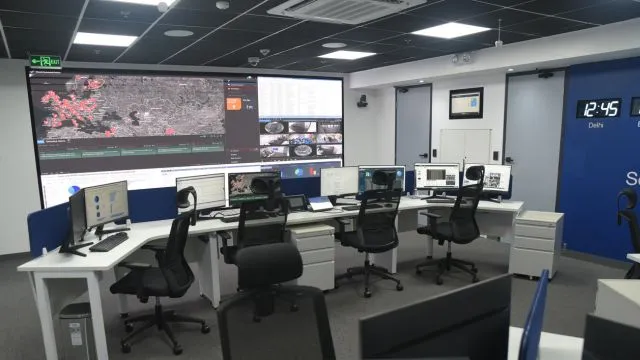
Case Study: Convergint Partners with Crestron to Implement Cutting-Edge Hub for AV Innovation in Manila

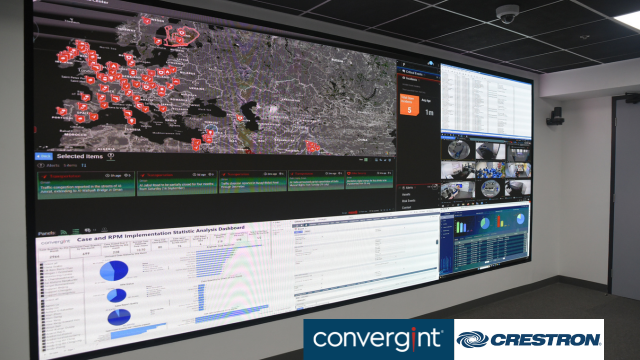
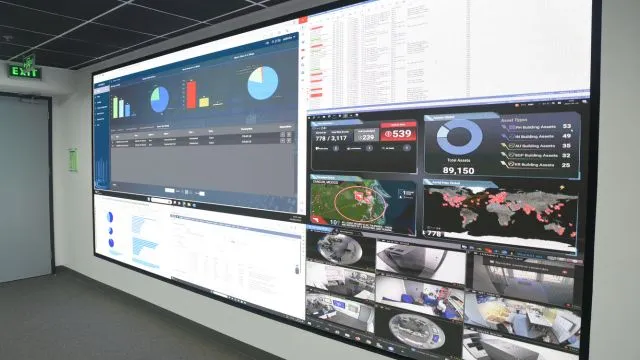
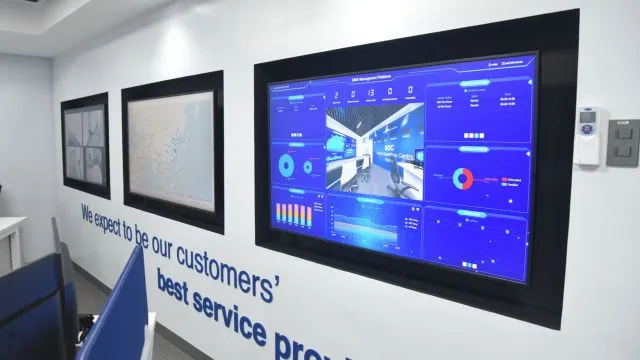
AV hub showing map, graphs and data

In 2023, Convergint opened a new CTC in Manila, Philippines, to meet growing business demands in the region. This new, state-of-the-art facility is of key strategic importance, serving as the centre of Convergint’s expanding audio-visual (AV) business in Southeast Asia and hosting Convergint’s largest Service Operations Centre (SOC) in Asia Pacific (APAC). This SOC serves as a centralised hub for the deployment of Managed Services in APAC and provides 24/7 English-language customer support and maintenance services.


Challenge.

The new office needed to excel at two major areas. Firstly, as a demo facility to showcase the latest AV and unified communications (UC) technologies and solutions to customers across APAC. Secondly, as the centre of Managed Services delivery and 24/7 customer support in the region, the facility demanded cutting-edge technology for optimised work efficiency and collaboration to ensure an outstanding customer experience.


Solution.

Based on the office space and functionality, the Convergint team designed, installed, and integrated a comprehensive AV and UC system using Crestron Flex technology for an all-in-one solution that enables colleagues to be connected regardless of where they are in the facility.

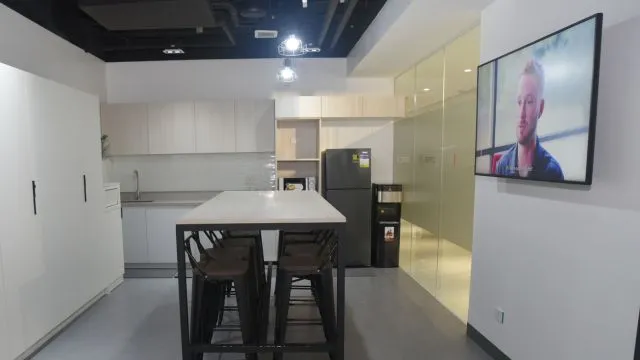
Core spaces include the boardroom, training room, office space and communal areas, as well as the crucial SOC. Each of these is equipped with large display screens, ranging from 65” to 85” in size, to facilitate video conferencing and media broadcasting. In addition, the SOC boasts an outstanding 4800 x 2025mm LED display wall to enable its operations. The Crestron Virtual Control platform empowers centralised management of all office screens, facilitating seamless content broadcasting across the entire workspace, subject to supervisor authorisation.

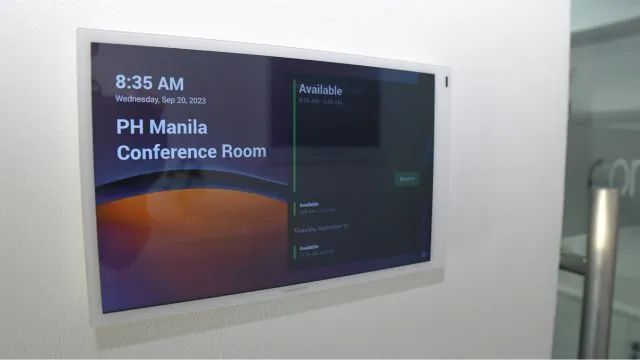
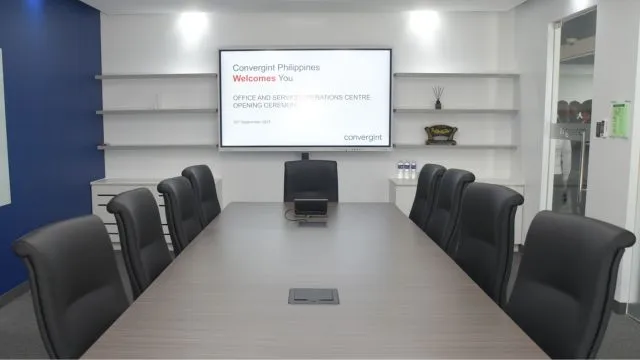
In the boardroom, the large 85” touchscreen display enables high-resolution video conferencing, with ceiling microphones and speakers set up to capture and relay sound. All lighting, power switches, blinds and monitor displays can be managed centrally for ease and convenience. To facilitate meeting-room use, and avoid clashes, a room-booking system was implemented alongside occupancy sensors. The Crestron Go Tablet and App offer a central place for organisers to easily manage the room’s facilities and technology, allowing colleagues to check at a glance if the room is in use.

“We had a clear vision for what we wanted to achieve for this space and how this would enable us to work more effectively as a team on the ground and virtually with global colleagues and customers. Our team conceptualised and designed the entire solution with Crestron’s technology as the foundation of the design due to the capabilities and features of the technology. This enabled us to achieve a cutting-edge workspace for our team and an impressive AV showcase facility for customers that seek similar AV and UC capabilities.”
–Dharmesh Gandhi, General Manager, AV, Convergint


Result.

The result of implementing Crestron’s solutions is a fully functional office with cutting-edge technologies, and the creation of an optimal workspace environment that functions for both remote and in-person colleagues. The comprehensive AV and UC capabilities make collaboration easier, facilitating efficiency across the board, both in the main office space and the SOC. “With the solutions in place, we are able to showcase some of the best technologies in the market to our customers, and help them envision how these solutions and platforms can be applied at their own offices and workspaces to achieve incredible results,” commented Dharmesh.

“The Manila SOC is our key English-language customer service support centre and Managed Services hub for the entire Asia-Pacific region. It is critical that our team is equipped with the latest technologies in the facility to enable efficient work and collaboration, helping us provide the best possible service to our customers. The solution in place absolutely achieves that goal.”

–Ricky Du, VP Strategic Accounts and Service, APAC, Convergint

Manila SOC customer service support centre

Manila SOC customer service support centre

Manila SOC customer service support centre

Manila SOC customer service support centre

Manila SOC customer service support centre

Manila SOC customer service support centre


Offering innovative AV solutions across multiple verticals.

Convergint is strategically aligned with the world’s leading AV technology partners to provide customers with transformative solutions across all locations and verticals. Contact a Convergint expert today to learn more about the solutions deployed in this case study.

Contact Us

Open post
Security team watching surveillance monitors

Enhancing Law Enforcement Outcomes with Integrated Surveillance Systems

The value of integrated, customized surveillance solutions for law enforcement.

A smart, integrated, city-wide surveillance solution is a valuable tool in every law enforcement team’s arsenal. These solutions seamlessly connect multiple devices, incorporate advanced analytics, and present actionable situational intelligence on a single screen. Such unification, coupled with access to real-time intelligence empowers public security teams such as police forces to proactively mitigate threats and maintain public safety and security.

This blog explores how integrated surveillance solutions eliminate the challenges presented by legacy devices. It also highlights how they provide timely, comprehensive, real-time situational intelligence to benefit a city’s law enforcement team and general public.

Here’s what it will cover:

  • The Limitations of Stand-alone Tools for Law Enforcement Surveillance
  • Integrated Surveillance for Real-time Situational Intelligence

The Limitations of Stand-alone Tools for Law Enforcement Surveillance.

Surveillance devices like IP cameras allow public security officials to surveil and monitor cities and towns. However, they also create blind spots that leave many areas vulnerable to crime, violence, riots, terrorism, vandalism, unclaimed objects, smuggling, traffic violations, accidents, and other threats.

Moreover, these devices often work independently and in siloes. Since they don’t share information with each other, it’s hard for police teams to maintain all-encompassing oversight over the city and achieve true situational awareness. As an urban center expands and becomes more complex, siloed devices make it even more challenging for law enforcement to monitor the city 24×7, proactively identify threats, run effective investigations, and mount well-coordinated and fast responses to crimes, emergencies, accidents, and other incidents.

Finally, disparate legacy devices simply capture surveillance data. They cannot identify patterns in that data to qualify if an event represents a true threat. As a result, they generate many false positives, creating unnecessary work for the police, wasting their time, and preventing them from focusing on real incidents and true threats.


Integrated Surveillance for Real-time Situational Intelligence.

As cities and their threat levels evolve, police teams need modern, unified surveillance systems to improve their holistic situational awareness. These systems seamlessly integrate multiple standalone tools, including network IP cameras, drones, identity and access management, intrusion detection, facial recognition, automated number plate recognition (ANPR), and communications systems to create a powerful, highly interoperable security ecosystem for the entire city. At the heart of the solution is a unified command-and-control (C&C) platform that simplifies the management of devices and enables police officers to easily monitor the city, improve emergency response, and run investigations – all from a single location.

The solution also unifies and automatically analyzes all the data generated by these devices and generates and presents real-time insights on a single screen. Law enforcement personnel don’t have to go back and forth between multiple applications to identify persons of interest, weapons, bombs, etc. Single-screen view plus real-time insights also enable them to take timely and collaborative action to prevent escalation and minimize damage.

A unified solution can even find patterns in the data from security devices to qualify events and pinpoint real problems. Since it reduces false alarms, police teams can focus on addressing, investigating, and mitigating genuine threats.

Unified surveillance solutions are also scalable. When designed and integrated by experienced systems integrators like MVP Tech – Convergint MEA, these future-ready solutions allow public security agencies to easily add new devices to the security environment. They can thus increase the environment’s interoperability and connectivity to consistently maintain situational awareness and threat-preparedness as the threat landscape evolves.


Interested in exploring more about smart city landscapes and how to ensure their security?

Watch our webinar to understand the security of smart cities and how to employ the right technologies that will enhance operational efficiency:

Watch Webinar

Open post
a skyline view of a modern city

Building a Unified Security Framework for Smart Cities with Open-Platform VMS

The key to robust security in smart cities: integrated security infrastructure with a video management system at its heart.

Smart cities are the future of urbanization and human society in MENA and elsewhere. But for citizens to enjoy all the benefits of these tech-powered cities, planners and decision-makers must first address several security and safety challenges. Many have made a great start to achieving this aim by implementing security devices like ultra HD surveillance cameras, thermal traffic cameras, next-gen sensors, and automated number plate readers (ANPRs).

But more often than not, these devices work in siloes, weakening smart city security and increasing the management burden for security personnel. For reliable, robust security, disparate devices must be well-integrated with each other. They should deliver valuable, actionable intelligence that decision-makers can harness to identify risks and enable coordinated and timely incident response. And last but not least, all the devices in the smart city’s security infrastructure must be easy to manage and customize, ideally from a centralized console with a user-friendly interface and features.

All these needs can be easily satisfied with a video management system (VMS) and the support of an expert system integrator. The best integrators implement complex security deployments with VMS at the core to provide city-wide security coverage and enable smart cities to respond effectively when under threat. And MVP Tech – Convergint ticks these boxes with ease.

What is a Video Management System for Smart Cities?

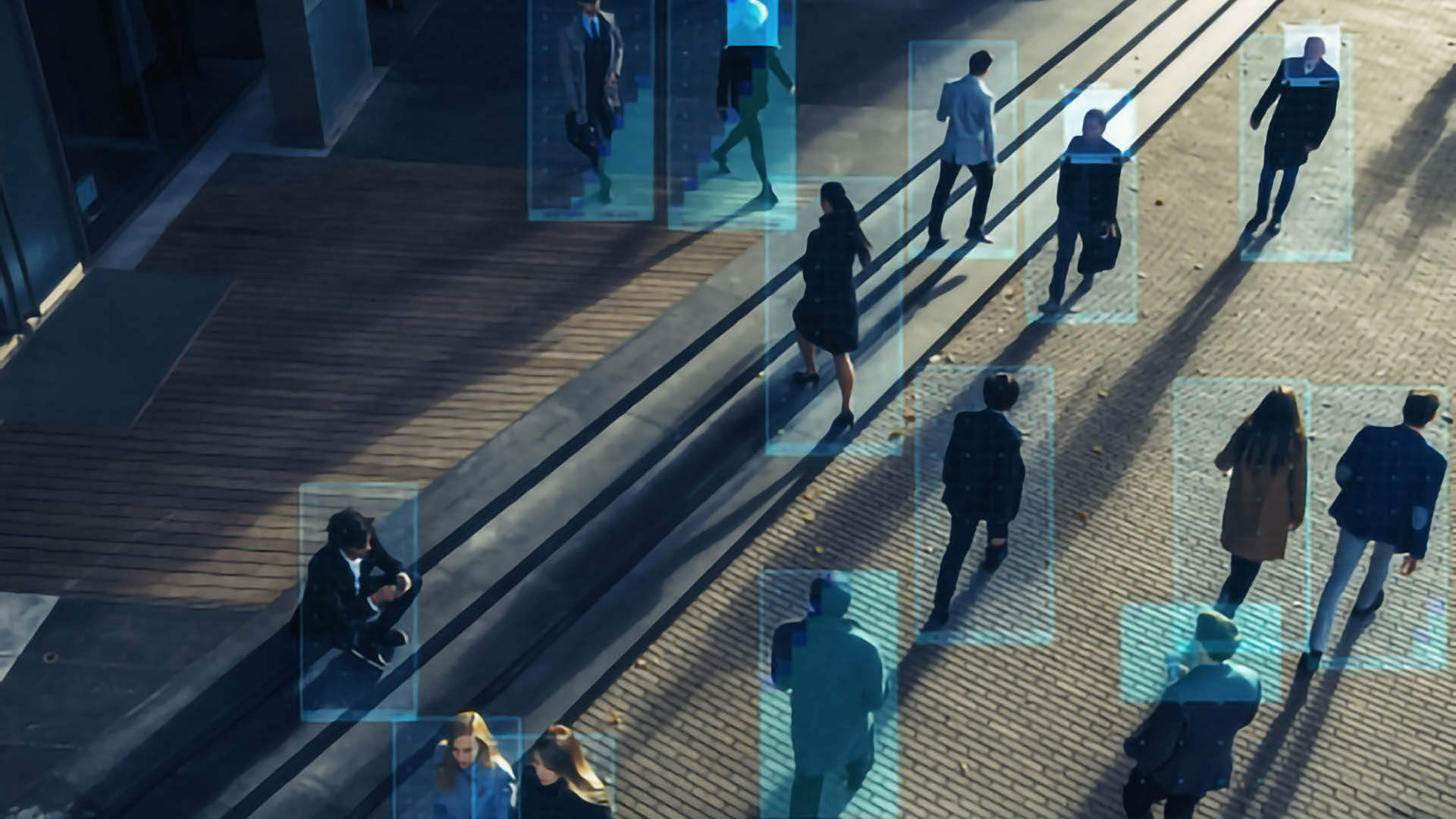
pedestrians walking by a business building with blue rectangles tracking their movements

A VMS combines software with hardware. The software works with and integrates all the surveillance hardware that makes up a smart city’s security infrastructure, such as cameras, alarms, ANPRs, and sensors. It provides a single platform and a simple visual console to monitor and review video from multiple systems in the security infrastructure, and effortlessly manage them all. The VMS also allows security teams to add or remove components to the infrastructure as new threats emerge and the city’s security landscape changes.

A VMS with AI capabilities functions as a centralized and intelligent “command center” for the smart city. Data from various devices is collated and automatically analyzed to detect threats and raise alarms, facilitating fast action and providing more proactive and effective security for the entire city. The analyses can also be customized to mask certain footage areas to satisfy privacy requirements.

How Smart Cities Can Benefit from a Video Management System

A VMS integrates multiple devices into a unified ecosystem. Its single centralized interface eliminates the need for personnel to individually access each system to review security information. Advanced VMS also apply AI-driven video analytics to all incoming video content and generate actionable insights in real-time. Moreover, when specific pre-set conditions are met, the system automatically triggers alerts – also in real-time. Security decision-makers can use these insights and alarms to identify threat scenarios, speed up decision-making, and quickly and proactively address security incidents.

Another benefit of a VMS is that it enables city officials, law enforcement agencies, and other key stakeholder to share crucial information, insights, and recommendations with each other. By doing so, they can better understand the city’s security needs and determine what measures are needed to optimize its security and safety.


Learn How a VMS Strengthens, Simplifies, and Optimizes a Smart City’s Unified Security Infrastructure

Prioritize your smart city’s safety and security with a unified security framework and a powerful, yet easy-to-use VMS.

Contact Our Experts

Open post
two security cameras point in different directions along a barbed wire fence at a high security facility

Leveraging Technology to Strengthen the Security of Correctional Facilities

How prisons can secure their premises and protect inmates and staff with technological solutions?

Prisons everywhere rely on guards, physical locks, and razor wires to secure their premises and protect the people within them. However, the prevalence of jailbreaks, violence, contraband smuggling, and criminal activities show that old-fashioned security measures are both inadequate and ineffective to create truly secure prison premises.

Today’s correctional facilities need modern security technologies that provide visibility into prison premises and perimeters, generate real-time insights about incidents and intruders, and enable officers to act quickly as soon as an incident is detected. When combined with human judgment and wisdom, these new-age systems strengthen prison security and safeguard them from illegal, unsavory, and dangerous incidents.


Must-have Security Technologies for Prisons

Today, correctional facilities and their decision-makers can choose from many solutions to secure their premises and people. These include:

Digital keycards and biometrics-based identity and access management/control

In any correctional facility, it’s important to control prisoner movement and ensure that they remain visible to security personnel. Movement control and visibility can prevent security incidents and keep everyone safe. And for this, reliable access control is crucial.

Compared to physical keys and locks, digital keycards and biometric authentication systems are harder to compromise and therefore provide more reliable access control and much stronger security. Digital and biometric systems can also keep out unauthorized or malicious users, while ensuring convenience and low-friction access for authorized users.

Smart visitor management

Visitors, both official (e.g., government personnel) and non-official (e.g., family of inmates), are a common sight in jails. To maintain security, staff must be able to screen and identify all visitors when they enter and leave the facility. They must also be able to account for all visitors during emergencies. It’s also crucial to ensure that visitors don’t stray into limited- or no-entry areas.

Biometrics-based visitor management systems can help meet all these goals. These systems can be used both to identify known visitors by comparing their details to a database, as well as to authenticate visitors’ identities and determine if they should be allowed to enter the prison premises.


Would you like to know more about how to enhance the security of correctional facilities?

Read our Full Article

Posts navigation

1 2