Building a culture of care for safer schools.
Align people, process, culture, and the connected technologies that help create safer, more prepared schools across every campus.
The challenge.
Safety cannot live in silos.
School safety is not defied by a single product, policy, drill, or reactive event. It is built through leadership, trusted partnerships, and a shared commitment to protecting the whole school community.
Increasing physical threats.
Layer security to deter, detect, delay and support coordinated response.
Expanding expectations.
Build a defensible safety program with clear priorities, documented processes, and measurable progress.
Multi-campus complexity.
Standardize platforms while creating centralized visibility across schools and facilities.
Limited operational visibility.
Connect security, facilities, communications, and operations into one ecosystem.
The Convergint K-12 approach.
A practical framework for building a culture of care.
Start with people and outcomes. Use technology as the enabler.
-
Build confidence before an emergency happens.
People: The most important safety asset is your people.
District leaders set the vision. Administrators bring expectations into daily practice. Staff reinforce routines. Students, families, first responders, and community partners all need clear roles and trusted communications.
- Align leadership, school teams, and community partners
- Include new staff, substitutes, volunteers, and after-hours personnel
- Give families and students clear, age-appropriate expectations
-
Turn plans into practiced, repeatable action.
Process: Shared language creates confident responses.
Readiness becomes real when people can apply consistent processes under pressure. Tabletop exercises, documented procedures, coordinated drills, and after-action review help teams move from awareness to action.
- Clarify decisions rights and escalation paths
- Practice emergency, reunification, and communication workflows
- Use after-action reviews to improve the next response
-
Make readiness visible in daily practice.
Culture: Preparedness becomes part of everyday leadership.
A Culture of Care is built in the small, consistent actions that happen every day: secured doors, repeatable visitor procedures, clear reporting, reinforced expectations, and regular learning.
- Make safety expectations consistent across every school
- Build staff confidence without creating fear
- Create communication habits families can trust
-
Let technology support the strategy, not define it.
Technology: Connected systems enable preparedness and action.
Integrated, open-architecture systems can connect security, facilities, communications, and operations into one ecosystem, giving leaders stronger visibility while supporting the people and processes already in place.
- Unify access, video, communications, analytics, and monitoring
- Create district-wide visibility across campuses and facilities
- Prioritize investments through a practical, phased roadmap
School Safety Leadership Academy.
A Leadership learning experience.
Not a product showcase. Designed to help district leaders test assumptions through peer learning and building shared language. Attendees will leave with tangible next steps that can be implemented immediately.
Partners: 

The "I Love U Guys" Foundation helps schools create a safer environment through national recognized programs that establish common language, coordinated planning, and practical response strategies. The National School Climate Center helps schools and districts create safe, supportive learning environments by measuring and improving school climate. Its research-based tools and training help leaders turn community voice and data into clear, sustainable action.
Engage.
Workshop a realistic, time-pressured school scenario.
Frame.
Connect the scenario to leadership responsibility and district reality.
Learn.
Build shared language with mission partner guidance and resources.
Apply.
Rework the scenario using the people, process, culture, and technology lens.
Act.
Leave with clear priorities and a practical 30-day action plan.
Leadership Academies - Coming in 2027!
K-12 security self-assessment.
Where does your school stand today?
Connected capabilities.
Secure K-12 operations end-to-end.
Convergint helps you build essential systems, including core systems, intelligence, and connected layers all guided by the outcomes your district needs most.
Foundational systems.
- Access control & credentialing.
- Enterprise video surveillance.
- Intrusion detection.
- Fire & life safety systems.
Intelligence & visibility.
- Advanced analytics for risk detection.
- Mobile access and operational dashboards.
- AI-enabled technology that enhances situational awareness and supports faster decision-making
Connected security layers.
- Perimeter detection.
- Environmental & condition monitoring.
- Operational communications.
Explore protection from the district to the classroom.
-
Coordinate safety across every school.
Connect district leadership, shared standards, and operational technology across campuses, facilities, and transportation.
-
Protect the space between the property line and the building.
Extend visibility, communication, and deterrence across campus entrances, parking areas, fields, playgrounds, and outdoor gathering spaces.
-
Control and verify every point of entry.
Strengthen the transition from campus grounds to the school interior through managed entrances, monitored openings, and responder access.
-
Protect the spaces where students and staff spend their day.
Support secure classrooms, clear emergency communication, situational awareness, and coordinated action through the building interior.
-
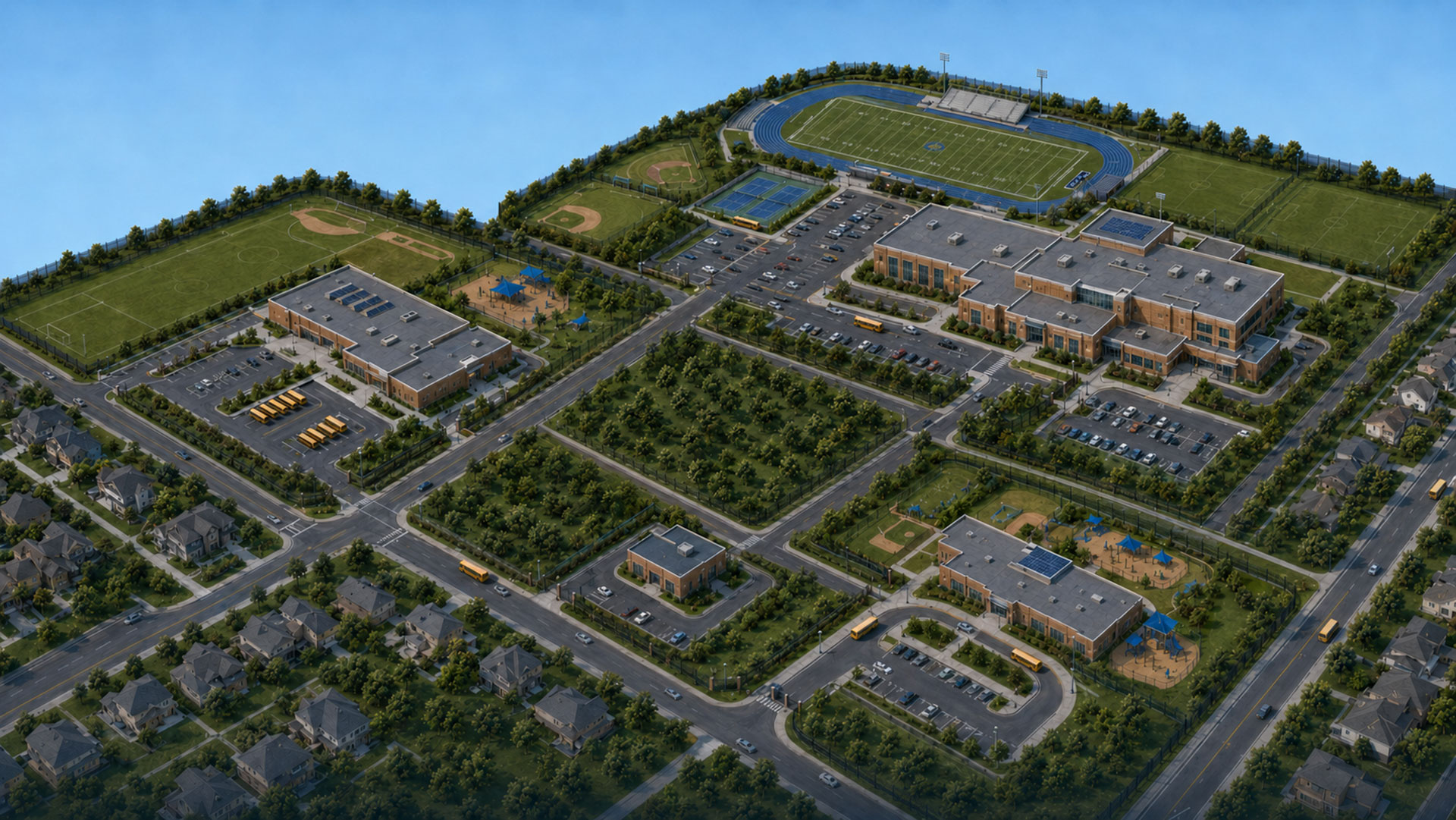 Transportation safety & visibility.
Connects bus communications, video, GPS, and optional rider check-in to district operations.
District security operations.
Centralizes visibility across video, access control, communications, intrusion, and duress events throughout the district.
Unified emergency communications.
Connects districtwide radio, public address, and mass notification systems for consistent alerts and coordinated response.
First responder mapping & access.
Provides tactical floor plans, numbered entrances, facility maps, and emergency building access for responders.
District access control & lockdown.
Supports consistent entry permissions, remote door release, and lockdown capabilities across district facilities.
Standardized video & alarm verification.
Applies common camera and recording standards while connecting alarms to video for faster assessment.
Visitor & identity management.
Uses visitor badging, electronic check-in, and identity screening to manage access consistently across the district.
Transportation safety & visibility.
Connects bus communications, video, GPS, and optional rider check-in to district operations.
District security operations.
Centralizes visibility across video, access control, communications, intrusion, and duress events throughout the district.
Unified emergency communications.
Connects districtwide radio, public address, and mass notification systems for consistent alerts and coordinated response.
First responder mapping & access.
Provides tactical floor plans, numbered entrances, facility maps, and emergency building access for responders.
District access control & lockdown.
Supports consistent entry permissions, remote door release, and lockdown capabilities across district facilities.
Standardized video & alarm verification.
Applies common camera and recording standards while connecting alarms to video for faster assessment.
Visitor & identity management.
Uses visitor badging, electronic check-in, and identity screening to manage access consistently across the district.
-
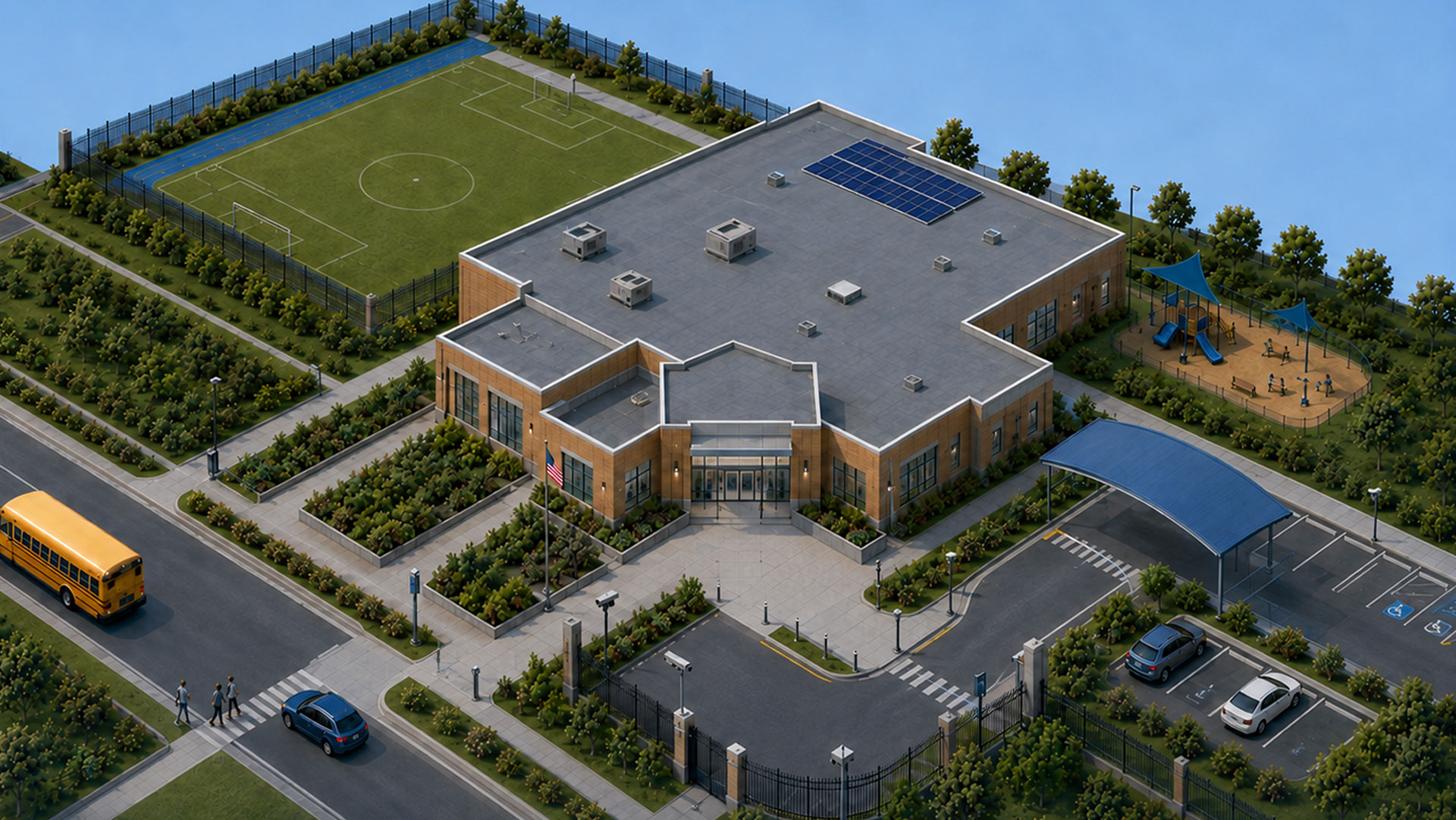 Wide-area video & security lighting.
Exterior cameras and coordinated lighting monitor fields, playgrounds, parking areas, and other large outdoor spaces.
Exterior panic & duress alerts.
Fixed or wearable panic devices allow staff to initiate emergency protocols from outdoor areas.
Perimeter video analytics.
Detects movement across defined fences or property lines and alerts personnel to activity requiring assessment.
Emergency call stations.
Two way audio or video call boxes provide direct communication with school or district security personnel.
Pickup & drop-off verification.
Identification-quality video documents student arrival and release activity, including associated people and vehicles.
Outdoor mass notification.
Audible and visual alerts extend emergency communications to people outside the school building.
Wide-area video & security lighting.
Exterior cameras and coordinated lighting monitor fields, playgrounds, parking areas, and other large outdoor spaces.
Exterior panic & duress alerts.
Fixed or wearable panic devices allow staff to initiate emergency protocols from outdoor areas.
Perimeter video analytics.
Detects movement across defined fences or property lines and alerts personnel to activity requiring assessment.
Emergency call stations.
Two way audio or video call boxes provide direct communication with school or district security personnel.
Pickup & drop-off verification.
Identification-quality video documents student arrival and release activity, including associated people and vehicles.
Outdoor mass notification.
Audible and visual alerts extend emergency communications to people outside the school building.
-
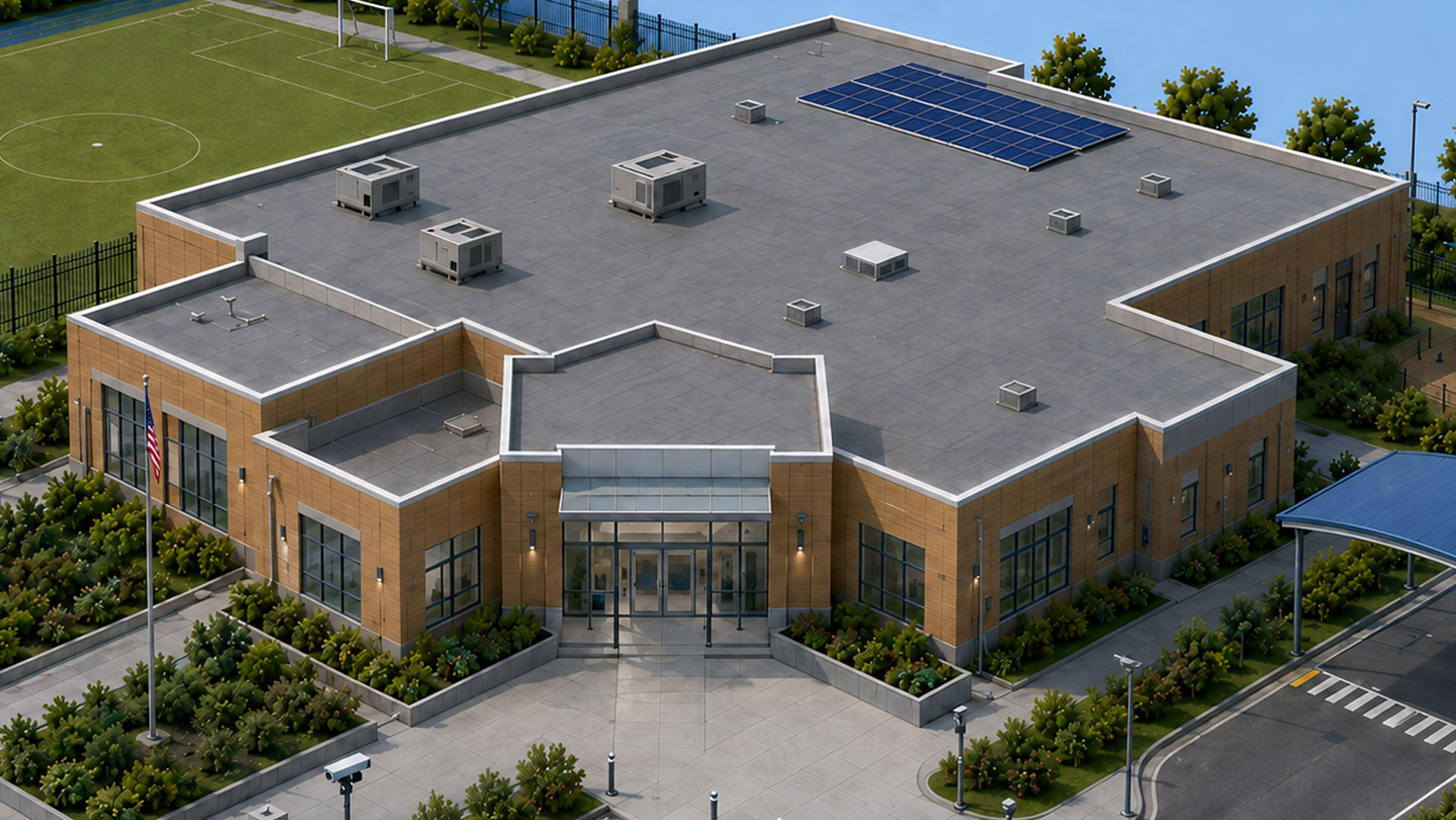 First responder access.
Numbered entrances and a secured key box help emergency responders identify and enter the correct location.
Protective doors & glazing.
Strengthens vulnerable openings using appropriate door construction, security film, or forced-entry-resistant glazing.
Exterior entrance video.
Provides recorded visibility at primary openings and other exterior access points around the building.
Secure visitor vestibule.
Routes visitors through a controlled entry and reception process they can access the rest of the building.
Video intercom & remote entry.
Enables staff to see and speak with visitors before remotely granting access.
Electronic access control & lockdown.
Controls authorized entry and supports remote locking or release during daily operations and emergencies.
Door status & intrusion monitoring.
Identifies doors that are opened, forced, or left unsecured and reports unauthorized access attempts.
First responder access.
Numbered entrances and a secured key box help emergency responders identify and enter the correct location.
Protective doors & glazing.
Strengthens vulnerable openings using appropriate door construction, security film, or forced-entry-resistant glazing.
Exterior entrance video.
Provides recorded visibility at primary openings and other exterior access points around the building.
Secure visitor vestibule.
Routes visitors through a controlled entry and reception process they can access the rest of the building.
Video intercom & remote entry.
Enables staff to see and speak with visitors before remotely granting access.
Electronic access control & lockdown.
Controls authorized entry and supports remote locking or release during daily operations and emergencies.
Door status & intrusion monitoring.
Identifies doors that are opened, forced, or left unsecured and reports unauthorized access attempts.
-
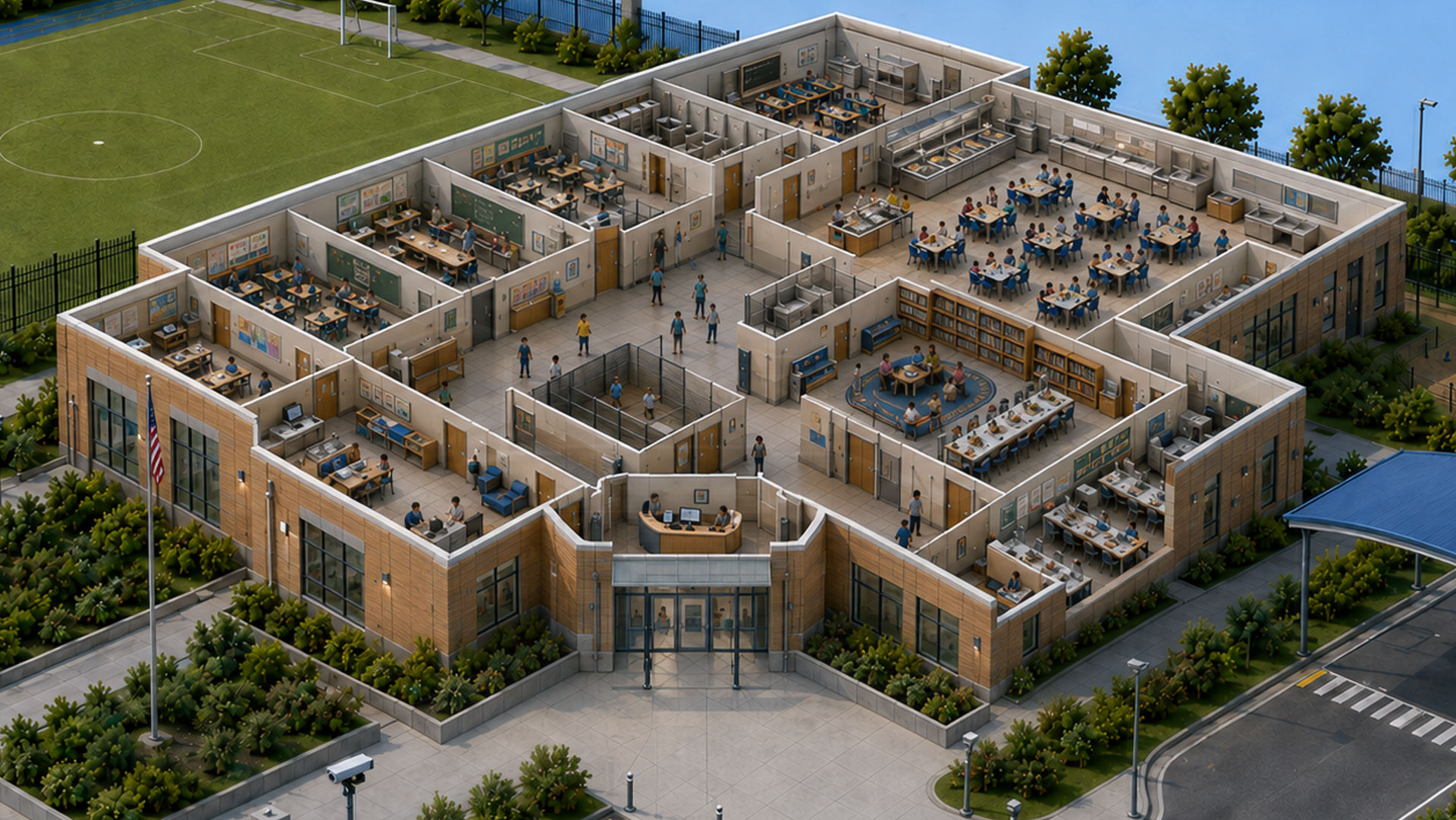 Protected shelter areas.
Preidentified areas outside the doorway's line of sight give occupants a safer place to shelter.
Secure classroom doors.
Doors remain closed and locked when occupied and can be secured from inside without opening the door.
Panic & duress alerts.
Fixed or wearable devices allow staff to quickly notify administrators, monitoring personnel, or first responders.
Corridor compartmentalization.
Cross-corridor doors can close and lock during an emergency to limit movement through the building.
Interior video coverage.
Fixed cameras provide awareness across hallways, stairwells, common areas, restricted spaces, and known problem areas.
Integrated detection & alarms.
Intrusion, fire, panic, communications, access control, and video systems work together to support coordinated response.
Emergency communications.
Public address and two-way intercom systems deliver intelligible alerts and allow rooms to contact central staff.
Protected shelter areas.
Preidentified areas outside the doorway's line of sight give occupants a safer place to shelter.
Secure classroom doors.
Doors remain closed and locked when occupied and can be secured from inside without opening the door.
Panic & duress alerts.
Fixed or wearable devices allow staff to quickly notify administrators, monitoring personnel, or first responders.
Corridor compartmentalization.
Cross-corridor doors can close and lock during an emergency to limit movement through the building.
Interior video coverage.
Fixed cameras provide awareness across hallways, stairwells, common areas, restricted spaces, and known problem areas.
Integrated detection & alarms.
Intrusion, fire, panic, communications, access control, and video systems work together to support coordinated response.
Emergency communications.
Public address and two-way intercom systems deliver intelligible alerts and allow rooms to contact central staff.
School safety grants.
Turn school safety funding opportunities into safer learning environments.
School safety grants can help districts accelerate critical security improvements without placing additional strain on operating budgets. The strongest applications begin with a clear understanding of district priorities, existing infrastructure, and desired outcomes. Convergint helps K-12 leaders prepare for funding opportunities through practical planning resources and strategic guidance, providing solutions aligned to today's school safety priorities.
Whether you're planning access control upgrades, video surveillance modernization, emergency communications, visitor management, or campus-wide situational awareness, preparation is key. Explore our grant planning resources to better understand available funding opportunities and evaluate your district's readiness before the next grant cycle begins.
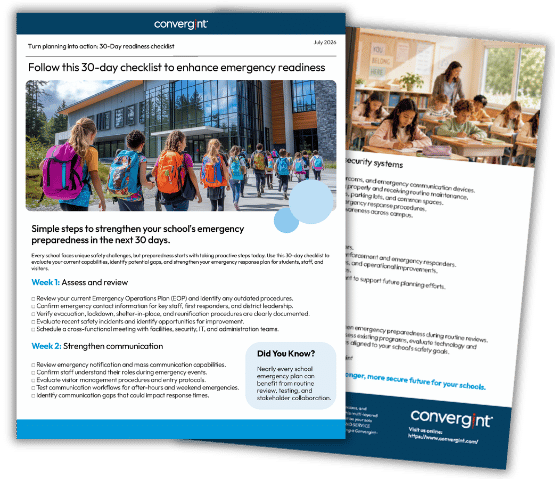
30 day readiness checklist.
Turn readiness into action, one focused week at a time.
Give district teams a practical follow-through resource that moves from assessment and communication to system evaluation and action planning.
Week 1: Assess & review.
Week 2: Strengthen communication.
Week 3: Evaluate technology & security systems.
Week 4: Prepare for action.
Simplified procurement for K-12
school safety projects.
School districts face increasing pressure to modernize security, balancing limited resources and complex purchasing requirements under aggressive implementation timelines. Convergint helps simplify the procurement process through nationally recognized cooperative purchasing contracts that reduce administrative effort while supporting compliance and competitive pricing.
As an approved provider through cooperative purchasing programs such as Sourcewell and OMNIA Partners, Convergint enables districts to move projects forward faster without the traditional procurement burden. From planning through implementation, our education specialists help schools deliver integrated security solutions that support safer campuses and stronger operational readiness.
A faster path to safer schools.
Challenge: Traditional procurement processes slowed critical security improvements.
Gresham-Barlow School District used Sourcewell’s cooperative purchasing contract to reduce administrative delays and access transparent, competitively awarded pricing through Convergint. By simplifying procurement, the district can move security projects forward faster—keeping resources and attention focused on creating safe, welcoming schools where students can learn and thrive.
Take the next step.
Start with a second set of eyes.
Fill out the form below to schedule a complimentary assessment to understand how your current approach supports people, process, culture, and the technology that enables them.
- Understand what is working well.
- Identify gaps in visibility, communication or response.
- Receive practical recommendations you can act on.
Our trusted partners.
Safer schools are built through strong partnerships. Convergint brings together leading technology providers and K–12 security expertise to help districts protect students, support staff, and strengthen readiness across the entire school community.
By connecting people, processes, and technology, we help schools take a layered approach to safety, improving everyday awareness, supporting coordinated response, and adapting as risks, priorities, and campuses evolve.