
-
The path to intelligent security.
Most organizations already have AI in their security stack. Few are using it to its full potential.
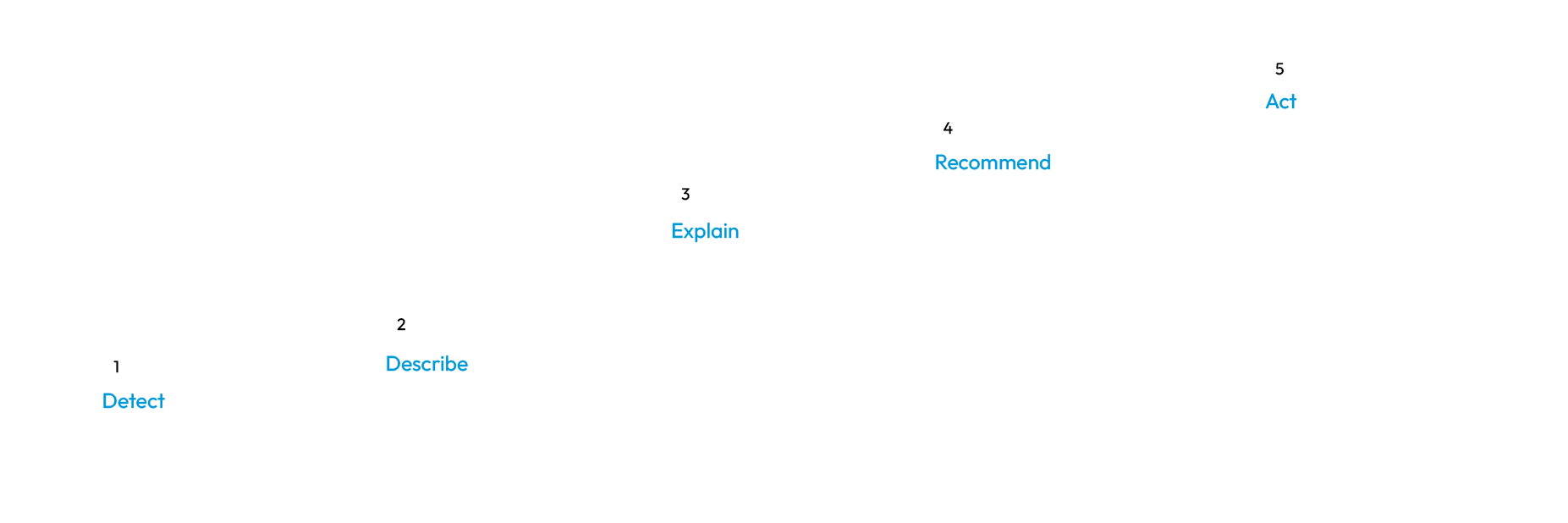
The same incident. Five different outcomes.
This experience walks through a single, real-world incident: An after-hours unauthorized entry. The event does not change. Only the outcome does. Where you sit on the path determines what happens next.
-
Detect the event. Not the outcome.
Level 01
Most organizations start here.
Security systems do what they were designed to do. Detect defined events in real time. Alarms trigger. Events are logged. Video is recorded.
But detection alone does not create understanding.
Operators are left to interpret alerts, navigate between systems, and determine whether an event is real. The process is manual, inconsistent, and highly dependent on individual experience and workload.
This is where most environments operate today - capturing signals, but not yet turning them into intelligence.
Detection answers what happened. It does not answer what it means.
-
From alerts to understanding.
Level 02
Faster visibility. Still reactive.
Systems begin to organize and describe what occurred. Events are classified, summarized, and enriched with basic context - time, location, and supporting evidence.
Operators no longer have to build incident reports from scratch. The system provides a structured narrative.
But the systems are still operating in parallel.
Video, access control, and intrusion data are presented side by side. Not connected, not validated. The burden of interpretation remains.
You can see the event more clearly. You still have to decide if it matters.
-
This is where everything changes.
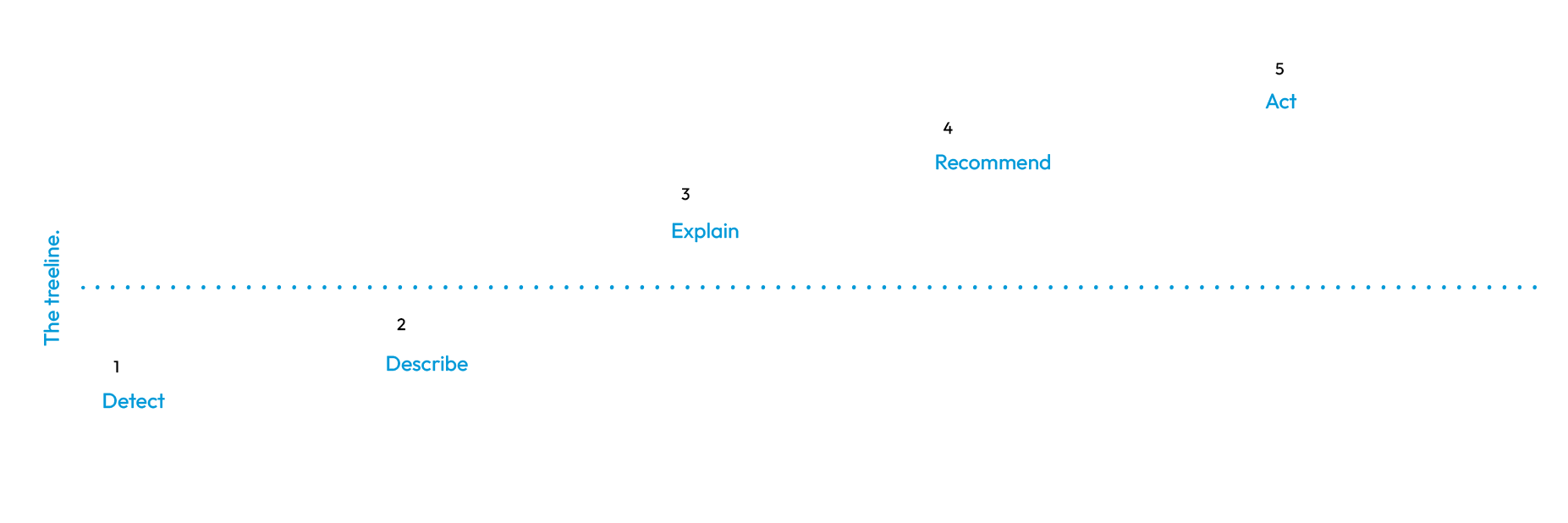
Treeline
From information to intelligence.
Most organizations operate below the treeline, focused on detection and description. They see events, but they do not yet understand them in context.
The shift happens at Level 03.
This is where systems begin to correlate data across domains - video, access control, intrusion, and communications - to validate events before they reach the operator.
It is the difference between reviewing signals and acting on intelligence.
Above the treeline, decisions become faster, more consistent, and more defensible.
Below the treeline: data.
Above the treeline: intelligence. -
Correlated. Validated. Defensible.
Level 03
Where operational efficiency becomes business value.
Systems begin to explain what is happening, not just report it.
Data from multiple systems is correlated into a single, validated incident view. Events are confirmed using context, sequence, and cross-system evidence.
Operators are no longer asking, “Is this real?” They are deciding what to do next.
This is the inflection point.
It is where false alarms decline, response times accelerate, and security operations begin to deliver measurable business outcomes.
This is where security shifts from reactive to reliable.
-
From response to foresight.
Level 04
Understanding patterns. Preventing risk.
Security systems begin to look forward, not just backward.
Patterns emerge. Recurring vulnerabilities are identified. Policy gaps surface. Systems begin to recommend actions based on observed risk trends and performance data.
Security moves beyond incident response into risk management.
Leaders gain visibility not just into what happened, but why it keeps happening.
You are no longer reacting to incidents. You are reducing the conditions that create them.
-
From insight to execution.
Level 05
Orchestrated, automated, and accountable.
The system acts.
Validated incidents trigger pre-approved workflows across systems - notifications, access control changes, video escalation, case creation, and response coordination.
Every action is logged. Every decision is traceable. Every system participates.
The operator is no longer assembling the response. They are overseeing it.
This is where intelligent security becomes operational reality. Scalable, consistent, and fully auditable.
The response is already in motion before you intervene.
-
Advancing changes the equation.
From operational improvement to strategic advantage.
Level
Operator role
Response time
Outcome
01 - Detect
Investigator
Slow
Inconsistent
02 - Describe
Reviewer
Faster
Documented
Treeline
03 - Explain
Decision maker
Minutes
Validated
04 - Recommend
Risk manager
Proactive
Preventive
05 - Act
Commander
Seconds
Orchestrated
Level 01 - Detect
Operator role - Investigator
Response time - Slow
Outcome - InconsistentLevel 02 - Describe
Operator role - Reviewer
Response time - Faster
Outcome - DocumentedTreeline
Level 03 - Explain
Operator role - Decision maker
Response time - Minutes
Outcome - ValidatedLevel 04 - Recommend
Operator role - Risk manager
Response time - Proactive
Outcome - PreventiveLevel 05 - Act
Operator role - Commander
Response time - Seconds
Outcome - OrchestratedMost organizations invest in security technology to reduce risk. Few fully realize the broader impact.
As organizations advance along the path, outcomes compound:
- Faster response and containment.
- Fewer false positives and unnecessary escalations.
- Improved operator productivity.
- Lower total cost of operations.
- Stronger compliance and audit readiness.
- Increased business continuity and resilience.
The difference is not the technology itself.
It is the ability to turn capability into outcome through structure, integration, and disciplined execution.
Security is no longer just protection.
It becomes performance.
Why it matters.
Artificial intelligence is rapidly transforming physical security, but most organizations are still operating well below what their systems are capable of delivering.
Across environments, security teams are detecting events, but not consistently understanding them. They are capturing data, but not connecting it. They are investing in AI-enabled platforms, but struggling to translate capability into measurable operational and business outcomes.
The difference is not access to technology. It is the ability to operationalize it.
That gap represents the largest untapped opportunity in modern security operations.