Open post
Aerial image of Bucharest, Romania

Protecting Romania’s critical environments: Local expertise, global capabilities

Protecting essential services takes reliable technology, local knowledge and ongoing support. For organisations operating in Romania’s critical sectors, security systems need to protect people and assets while supporting day-to-day operations.

Convergint Romania combines local expertise with global capabilities to deliver integrated security solutions, fire and life safety systems, and lifecycle services tailored to each customer’s environment.

Integrated security solutions for Romania’s critical sectors

Convergint supports organisations across Romania, including transport, data centres and utilities. Each sector has distinct requirements, making a coordinated approach to security essential.

  • Transport: Busy transport facilities must balance safe movement with controlled access to restricted areas. Access control, video surveillance and intrusion detection can help teams maintain visibility and respond to incidents while supporting passenger and operational flows.
  • Data centres: Protecting sensitive infrastructure requires controlled access and clear oversight of activity around critical assets. Integrated security systems bring together surveillance, access control and alarm information to support secure operations as facilities expand.
  • Utilities: From staffed operational centres to remote infrastructure, utilities face varied protection needs. Perimeter security, intrusion detection and coordinated alarm information help teams identify potential threats and manage their response.

Local service backed by global expertise

Effective security starts with understanding the site. Convergint’s Romanian teams bring regional knowledge and technical expertise, supported by the resources and experience of a global systems integrator.

For organisations with multiple facilities, this approach helps align security standards across locations while accommodating local operational requirements.

Convergint Romania’s capabilities include access control systems, video surveillance, intrusion detection, fire and life safety, communications and security operations centres. Solutions are designed around each organisation’s risks, people and workflows.

Support throughout the system lifecycle

Long-term performance depends on continued attention. Maintenance, technical support and planned upgrades help security systems keep pace with changing operational needs.

Convergint Romania provides services spanning consultancy, site assessments, design, installation and integration, remote services and maintenance. This lifecycle approach supports customers from initial planning through ongoing operation.

By connecting local service with global capabilities, Convergint helps organisations protect Romania’s critical environments today and plan for tomorrow.

Contact Convergint Romania to discuss integrated security systems, fire and life safety, and ongoing service support.

Open post
data centre server

Convergint Finland joins the Finnish Data Center Association

Convergint’s Finland Technology Center (CTC) has joined the Finnish Data Center Association (FDCA), connecting the team with companies and professionals across Finland’s data centre industry.

The membership complements Convergint’s global data center vertical, which supports hyperscale, colocation, enterprise and edge facilities with integrated security solutions. Combining global expertise with local delivery, Convergint provides services spanning design, installation and ongoing maintenance, including access control, video surveillance and perimeter protection.

Through the FDCA, the Finland team will have opportunities to build relationships, exchange expertise and engage with the wider industry, bringing Convergint’s global capabilities to local conversations about secure and resilient data center infrastructure.

Finnish Data Center Association badge

Open post
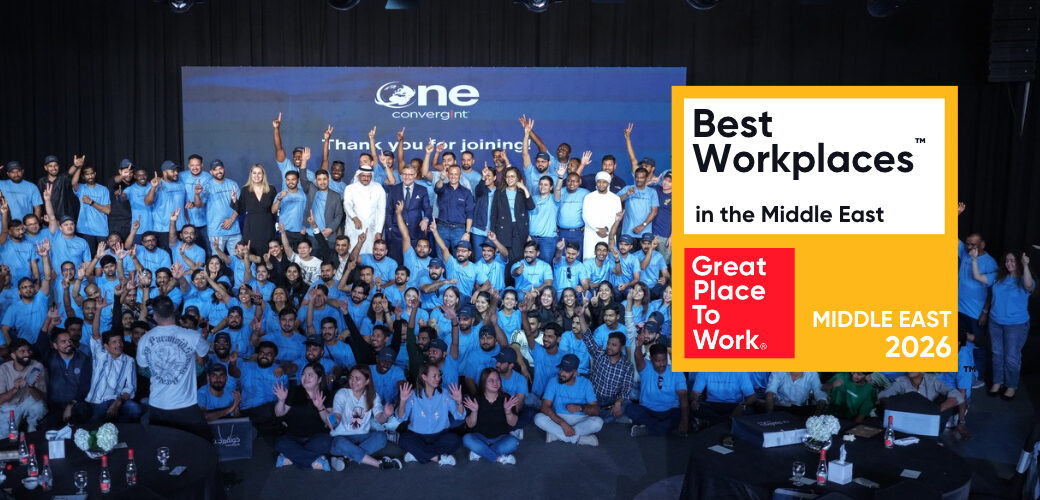
certificate of best place to work in Middle east on MEA group photo

Convergint MEA ranked for the first time in Middle East™ 2026 Best Workplaces

Recognition reflects how our colleagues put Convergint’s Values & Beliefs into practice every day: supporting one another, serving customers, staying safe, and giving back to our communities.

Convergint MEA has been ranked #39 on the Best Workplaces in the Middle East™ 2026 list, published by Great Place To Work® Middle East. The list recognizes organizations across the region that foster workplaces built on trust, pride, and camaraderie.

Said Kiwan, Managing Director of Convergint MEA, said:

“This ranking belongs to every colleague across Convergint MEA. It reflects how we support one another, take care of our customers, look out for each other’s safety, and give back to the communities where we work. I’m proud of what our team has achieved, and the resilience, commitment, and spirit of service they bring to their work every day.”

Great Place To Work® is a global authority on workplace culture. Since 1992, its research has surveyed more than 100 million employees worldwide.


About Convergint

Convergint is a global leader in tech-enabled security and safety solutions. In the Middle East and Africa (MEA), our team of more than 400 colleagues across offices in the UAE, Saudi Arabia, Iraq, and South Africa offers tailored design, implementation, integration, management, and service solutions to meet the region’s needs. Backed by Convergint’s global network of more than 11,000+ colleagues and 220 locations, the MEA team combines deep regional expertise with global scale to help customers navigate complex risks and compliance requirements with confidence. Guided by our core values and a service-first mindset, we strive to be our customers’ best service provider.

To learn more, visit Convergint MEA.

Open post
Cybersecurity lock graphic

Preparing for NIS2 with Convergint

Turn readiness into action

NIS2 readiness brings identity, physical access, operational security, monitoring, and response processes into sharper focus. Organisations need evidence that security controls are in place, actively managed, and ready to support incident response and audit requirements.

Convergint helps organisations connect these areas through security technology, integration expertise, and lifecycle support. Our NIS2 brochure outlines the practical ways we can help strengthen security and improve operational resilience.


How Convergint can help

  • Identity and access security: Strengthen access control, credential management, and authentication to support secure access across your organisation.
  • Physical security integration: Protect critical rooms and data centres with integrated access, visitor management, intercom, and controlled-entry solutions.
  • Monitoring and response: Connect security systems with centralised monitoring, real-time alerts, and coordinated response workflows.
  • Lifecycle support: Support system readiness through firmware patch management, preventive maintenance, software support, and emergency service response.
  • Audit readiness: Maintain access logs, credential records, maintenance evidence, and documentation to support audits and improvement planning.

Explore your next steps towards NIS2 readiness

The Convergint NIS2 brochure to learn how integrated physical security, identity, monitoring, and operational support can help your organisation prepare with confidence.

Download NIS2 brochure


Open post
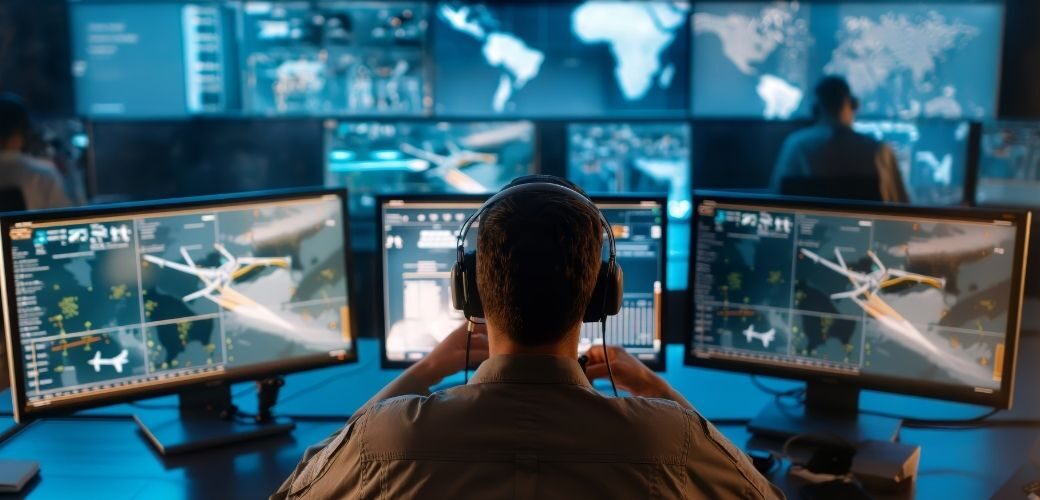
Security operations center with an operator monitoring multiple surveillance and analytics screens.

How to turn AI in security into real business value

Cameras and sensors are everywhere. But in too many security operations those devices only create noise: thousands of alerts, manual clip review, and long investigations that eat time and budget. The technology is not the problem, the way we use it is. The difference between wasted capability and measurable impact is a simple one: a framework that turns detection into validated incidents, prioritized recommendations, and auditable actions.

Why this matters now.

Security teams are under pressure on three fronts: rising threat complexity, tighter regulatory scrutiny, and leaner budgets. Boards ask for defensible risk reduction. CISOs must show ROI. Security operation center(SOC) teams face alert overload and burnout. AI promises to help, but without a clear path it becomes another vendor feature that underdelivers. The real opportunity is to stop treating AI as a checkbox and start treating it as a staged capability you build and measure.

A Practical Five-Step Path to Intelligent Security:

  • Detect: Systems reliably sense events (motion, door forced, perimeter breaches). This is the baseline: if you can’t detect reliably, nothing else works.
  • Describe: Alerts are auto classified and packaged with key clips, timestamps and short summaries. This saves operators hours of report writing.
  • Explain: Correlate video, access logs, intrusion and intercom so incidents are validated before people move. This is the inflection point where operational gains start becoming business value.
  • Recommend: Use historical data and probabilistic models to forecast hotspots and device failures, and recommend prioritized interventions.
  • Act: Execute pre-approved runbooks automatically for routine responses while preserving full audit trails and human approval for high-risk actions.

Why Level 3 is the game changer?

Many organizations reach Levels 1-2: they detect and generate summaries. But Level 3: Explain is where the view clears. Correlation across systems reduces false dispatches, raises confidence, and produces packaged evidence that investigators and auditors can trust. In short, you stop spending time proving what happened and start spending time preventing it from happening again.

Business outcomes you can expect when the path is followed deliberately, returns are measurable and compound as you climb:


  • Cost reduction: fewer unnecessary guard call outs and lower overtime.
  • Faster investigations: evidence assembled in minutes, not hours.
  • Reduced risk: earlier containment, fewer repeat incidents.
  • Operational scale: one SOC can cover more sites without linear headcount growth.
  • Compliance readiness: automated retention, traceable decisions, and auditable runbooks.

How to get started:

  1. Assess per use case, not in aggregate. You may be Level 3 in access control and Level 1 in perimeter analytics, treat them differently.
  2. Prioritize quick wins: pick high‑impact, high‑readiness use cases where data and integrations already exist.
  3. Invest in data readiness: structured event metadata, timestamps, normalized location IDs, and documented APIs make cross‑system correlation possible.
  4. Define governance early: decide what actions the system can take autonomously, which require approval, and how you’ll audit every step.
  5. Pilot and measure: set clear KPIs (false dispatch reduction, time‑to‑triage, sites‑per‑operator) and validate assumptions before scaling.

AI in security is not a single product, it’s a capability you build.

Start small, measure clearly, govern tightly, and scale deliberately. The biggest wasted opportunity today is not a lack of AI, it’s a lack of path. Adopt a structured roadmap and your cameras and analytics stop being noisy inputs and become a predictable risk‑reduction engine.

Want the full framework, technical guidance, and a pilot playbook?

Explore The Path to Intelligent Security report, the practical guide that walks you from Detect to Act and shows how to measure ROI every step of the way.

Download the full report

Open post
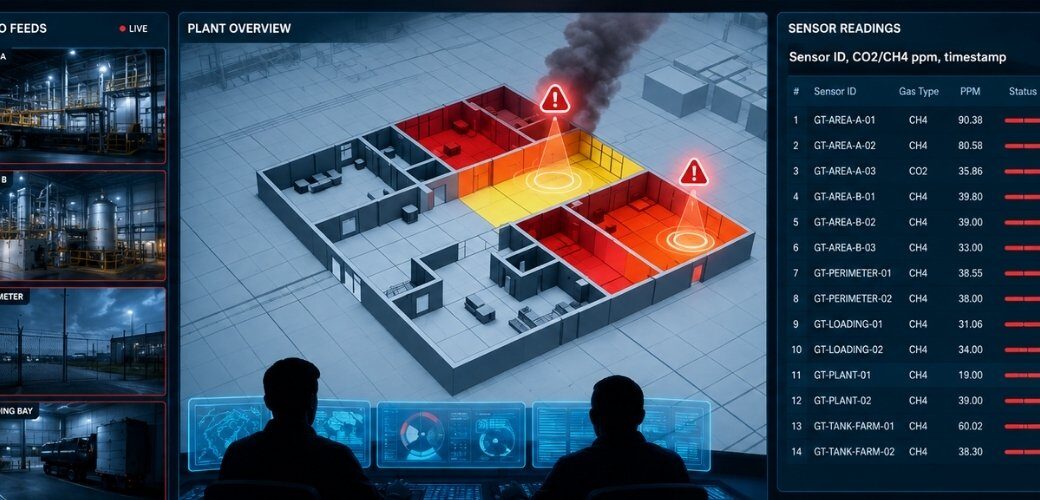
AI-powered industrial monitoring dashboard showing live video feeds, plant overview, and real-time gas sensor alerts.

How AI analytics can enable smarter remote monitoring for oil & gas operations

Remote monitoring is changing in the oil & gas industry

Oil and gas operators depend on a vast network of geographically dispersed assets including pipelines, wellheads, compressor stations, storage facilities, processing plants, and other critical infrastructure.

Ensuring the safety, security, and operational continuity of these locations requires continuous monitoring, often across challenging and remote environments.

However, maintaining visibility across distributed operations can be difficult. Limited on-site personnel, expansive facilities, harsh environmental conditions, and the distance between sites and response teams can make it challenging to detect incidents early and respond effectively.

The challenge is no longer simply deploying more technology and sensors. Organizations need the ability to turn large volumes of data into actionable intelligence, enabling teams to understand what is happening, identify potential risks, and respond quickly when incidents occur. This is where AI surveillance is transforming remote monitoring.

A unified AI – powered security approach – moving from reactive monitoring to intelligent risk detection.

Traditional monitoring systems often rely on operators reviewing camera feeds or responding to isolated alarms. While these technologies remain essential, they can create large volumes of alerts that require manual verification and investigation.

AI-powered video analytics introduces a more intelligent approach by continuously analyzing live video streams and operational data in real time. These capabilities can help identify and classify safety and security events such as:

  • Unauthorized access and perimeter breaches
  • Theft, vandalism, and suspicious activity
  • PPE compliance violations
  • Loitering and restricted area intrusions
  • Vehicle movement anomalies
  • Smoke, fire, and thermal abnormalities
  • Operational safety hazards

Rather than requiring operators to monitor every video feed, AI analytics can automatically surface critical events, helping teams focus their attention where it matters most.

For remote and unattended oil and gas facilities, this can significantly improve situational awareness while reducing the burden on security personnel.

AI analytics can add another layer of intelligence by analyzing sensor data alongside video surveillance, thermal imaging, and other available inputs. When multiple signals point to the same event, operators can gain greater confidence that an alarm represents a genuine incident and requires attention.

This creates a more connected approach to remote monitoring, where detection is not treated as an isolated event but as the starting point for understanding what is happening.

Connecting detection with centralized response

AI analytics become particularly valuable when connected to centralized Security Operations Centers (SOCs) or command-and-control environments.

Analytics bring relevant events directly to the attention of operators across distributed locations. Alerts, associated video, and other available information can be presented through centralized dashboards, allowing operators to assess situations remotely and determine the appropriate response.

AI can also help with cross-reference information from different systems. A gas detector alert, for instance, can be assessed alongside video or thermal data to help verify whether there are visible signs of a leak or another abnormal condition. Similarly, a perimeter alert can be evaluated against camera footage to determine whether the event represents unauthorized activity or a lower-priority occurrence.

This approach can also help prioritize incidents based on predefined rules and available context. Rather than treating every alert with the same level of urgency, operators can focus their attention on events that require investigation or immediate action.

Transforming real-time monitoring into proactive risk management

The value of AI – enabled analytics extends beyond identifying individual incidents. By analyzing both real-time and historical operational data, organizations can uncover trends and patterns that may indicate emerging risks. For example:

  • Repeated perimeter breaches may identify physical security vulnerabilities.
  • Recurring PPE violations may highlight training or compliance issues.
  • Frequent environmental alarms could indicate equipment degradation.
  • Changes in gas detection patterns may reveal developing operational concerns.

Over time, these insights support a more proactive approach to safety, security, and operational resilience.

Instead of simply responding to individual incidents, organizations can identify underlying issues earlier, implement corrective measures, and reduce the likelihood of future events.

The result is improved risk management, stronger compliance, and greater operational efficiency across critical assets.

 Building a scalable and connected security ecosystem

Every oil and gas environment has a different risk profile. A remote pipeline installation may require a different combination of technologies than a refinery, processing plant, storage terminal, or offshore facility.

A unified security architecture enables organizations to scale technologies across diverse environments while maintaining centralized visibility and control.

Integrated solutions can include:

When connected through a centralized platform, these technologies provide a comprehensive view of security and operational risk across multiple locations.

Maintaining performance through managed and lifecycle services

Deploying security technology is only the first step. Long-term effectiveness depends on maintaining systems availability, reliability, and performance.

As remote monitoring environments grow in scale and complexity, organizations need ongoing support to ensure systems remain operational and aligned with evolving requirements.

Maintenance and lifecycle services can provide:

  • Preventative maintenance
  • Remote system monitoring
  • Software and firmware updates
  • System health diagnostics
  • Technical support and troubleshooting
  • Corrective maintenance and repairs

By combining advanced technology with ongoing service support, organizations can maximize system performance while reducing operational risk.

 Creating a smarter safety and security strategy

Effective monitoring in the oil and gas sector is not about relying on a single technology. It is about connecting detection, intelligence, and response into a coordinated safety and security ecosystem.

By bringing together centralized, intelligent security capabilities, organizations can move beyond isolated alerts toward a more complete understanding of risk.

Are your security systems working together as one?

Connect intelligent detection, surveillance, analytics, and response technologies to gain a clearer picture of risk and respond faster when it matters most.

Explore Convergint’s integrated oil and gas security solutions

Open post
Abu Dhabi skyline with modern skyscrapers along the waterfront.

Enhancing smart cities with centralized security solutions

A smart city brings together a wide range of systems, services, and stakeholders. Security is no longer limited to protecting individual buildings or facilities; it increasingly intersects with transportation, public services, critical infrastructure, emergency management, and other connected urban systems.

Research on smart city interoperability highlights a persistent challenge: cities often develop individual technology systems that work effectively within their own domains but are difficult to integrate across the wider urban ecosystem. (ref. NIST Research)

For security teams, this raises an important question: how can security move beyond protecting individual locations and support the wider city ecosystem?

Centralized command-and-control, systems integration, and interoperability enable city authorities and urban operators to bring access control, identity management, perimeter protection, intrusion detection, security communications, and emergency response workflows together across multiple locations.

Centralizing access across city facilities

Managing access across a large and geographically distributed urban environment can be complex. Different facilities often have different access requirements, user groups, and security policies. 

Centralized access control and identity management can help operators manage permissions and monitor access events across multiple locations through a connected system. This can provide greater consistency while allowing individual facilities to maintain security policies based on their specific requirements. 

Protecting critical infrastructure and remote assets

Critical infrastructure is rarely concentrated in one location. Essential assets are often widely dispersed, making it difficult for security teams to maintain consistent visibility and protection. Utilities, energy assets, communication infrastructure, and remote facilities all require security beyond a single building. 

Centralized security can connect perimeter protection, access control, intrusion detection, and other systems across multiple sites. This helps operators manage geographically dispersed assets while supporting greater visibility, risk reduction, and business continuity. 

Emergency communications and incident coordination

Detecting an incident is only one part of the process. During an emergency, information needs to move quickly between the people responsible for security, operations, emergency services, and other relevant stakeholders.

Integrated security communications and centralized command-and-control capabilities can support incident coordination by connecting relevant information, teams, and emergency response workflows. This can help reduce confusion and provide a more coordinated approach when events affect multiple locations or services. 

Managing access and security for connected transportation

Transportation is one of the most interconnected parts of a smart city. Stations, terminals, roads, and mobility infrastructure involve large numbers of people, vehicles, and operational systems.

A centralized approach can connect access management, security communications, and operations across these environments, supporting safer and more coordinated transportation infrastructure.

Integrating legacy and emerging technologies

One of the practical challenges in developing connected urban systems is that cities often operate a combination of legacy infrastructure and emerging technologies. Replacing every existing security system is neither practical nor necessary.

Integration platforms can help connect technologies across different locations and manufacturers, allowing cities to improve interoperability while introducing new capabilities over time.

Building a more connected security operation

Centralization does not necessarily mean replacing every system with a single technology. The goal is to create greater interoperability between the systems already in place while providing a clearer operational view across the city.

As AI and data-enabled security operations continue to evolve, connected systems can help organizations make better use of the information generated across the urban environment. This can support greater context, faster decision-making, and more coordinated responses across complex city operations.

Ultimately, the goal is not simply to centralize security technology. It is to create a connected security operation that can support the broader needs of an increasingly interconnected city.

Looking to enhance security operations across your smart city?

Our experts can help you design integrated security solutions that connect systems, information, and operations across complex urban environments.

Meet us at the Abu Dhabi Smart City Summit, where we’ll be exhibiting on 30 September – 1 October 2026, and discover how we can help build safer, smarter, and more resilient urban environments.

Contact our experts

Open post
Stock image of data center server

Customer Success Story: Convergint provides complex security solutions for a hyperscale data centre in Germany

Convergint has delivered a complex, scalable physical security solution for a confidential hyperscale data centre customer in Frankfurt, Germany, one of Europe’s most important digital infrastructure markets.


Challenge.

The project required more than standard system installation. The customer needed a security delivery partner with proven hyperscale data centre experience, strong local market capability, and the flexibility to adapt as construction and operational requirements evolved.


Solution.

Convergint worked closely with the customer and wider project team from the earliest stages of the programme, developing a physical security solution that could scale with the site.

The scope expanded from the site perimeter, substation, remote gate, administration building, and first data hall to include multiple data halls and a significantly larger equipment package. Convergint also assumed responsibility for the secondary containment package, helping align the security infrastructure with the wider construction programme.


Result.

The completed solution created a resilient, scalable security platform to support the facility’s long-term operational requirements. Delivered through Convergint’s dedicated data centre team, the project included:

  • Enterprise video surveillance
  • Access control
  • Biometric authentication
  • Anti-tailgating technology
  • Intelligent key management
  • Server cabinet locks
  • Alarm monitoring points
  • Security head-end infrastructure

By combining global data centre expertise with local delivery capability, Convergint supported operational handover and established a strong foundation for future phases as the campus continues to grow.


Conclusion.

This project demonstrates Convergint’s ability to deliver complex, scalable physical security solutions for mission-critical hyperscale data centre environments.

Download the Case Study

Open post
Man and woman shaking hands over a document

Convergint Enters into Gaming Industry Through Acquisition of Surveillance Systems Incorporated

LAS VEGAS, NV – September 2026 – Convergint, the #1 independent global services platform for tech-enabled security and fire & life safety solutions, today announced the acquisition of Surveillance Systems Incorporated (SSI), a highly respected provider of integrated surveillance and security solutions serving the gaming industry. The acquisition marks Convergint’s strategic entry into the gaming market, establishing a foundation for growth in a market with significant opportunity across North America and globally.

SSI brings deep expertise in complex gaming environments, longstanding relationships with leading gaming operators, and a strong reputation for technical excellence and customer service. By combining SSI’s specialized market knowledge with Convergint’s global resources and broad systems integration capabilities, Convergint is positioned to build a focused gaming practice and expand its ability to serve customers in this highly specialized and regulated market.

“Gaming represents a significant growth opportunity for Convergint, and SSI provides the expertise, relationships, and market knowledge to establish a strong foundation in this market,” said Sean Flint, President of Convergint. “Together, we see an opportunity to build on that foundation, bring Convergint’s scale and resources to the market, and create a platform for long-term growth in North America and around the world.”

SSI customers will gain access to Convergint’s broader service organization and global capabilities, while Convergint will benefit from SSI’s deep experience supporting surveillance and integrated security requirements within gaming environments. “For more than two decades, SSI has built its reputation on a simple principle: deliver the best possible customer experience. As we looked toward the future, it was essential to find a partner whose culture and values aligned with our own. We found that in Convergint,” said Todd Flowers, President & CEO, Surveillance Systems Incorporated.

The transaction reflects Convergint’s broader strategy of pairing organic growth with targeted acquisitions that add specialized expertise and create opportunities to serve customers in new industries and geographies.

Organizations interested in exploring acquisition opportunities with Convergint are encouraged to learn more about the company’s acquisition strategy and approach at convergint.com/who-we-are/acquisitions/.


About Convergint

Convergint is the #1 independent global services platform for tech-enabled security and fire & life safety solutions. The Company serves leading institutions in critical infrastructure, data centers, financial institutions, healthcare, and public sector industries. Founded in 2001 and headquartered in Hoffman Estates, Illinois, the company offers design, implementation, integration, management, and service solutions from more than 200 locations around the globe. Its over 11,000 colleagues worldwide combine deep vertical expertise with global scale and local service, to help customers navigate complex regulatory and compliance requirements with confidence.  Recognized as the #1 systems integrator in SDM Magazine’s Top Systems Integrators Report for the past 9 years and a U.S. News & World Report ‘Best Company to Work For.’ To learn more about Convergint, visit www.convergint.com.

Open post
a group of people in a business clapping to celebrate

Convergint Named #1 Systems Integrator by SDM Magazine for Ninth Year in a Row

Recognition reflects Convergint’s continued commitment to exceptional service, technical expertise, safety, and innovation

Convergint, a global leader in tech-enabled security and systems integration, has been named the #1 Systems Integrator in SDM Magazine’s 2026 Top Systems Integrators Report. This marks the ninth consecutive year Convergint has earned the industry’s top ranking, reflecting the dedication, expertise, and commitment of its colleagues around the world.

SDM Magazine’s annual Top Systems Integrators Report ranks companies based on North American systems integration revenue. The report recognizes performance across services including system design, project management, installation, programming, commissioning, training, and other solutions delivered directly to customers or through contractor partnerships.

2026 SDM Top Systems Integrators logo

Convergint’s continued recognition reflects the company’s ability to combine global scale with local service and deep industry expertise. Through its growing network of colleagues and locations, Convergint supports customers across complex security, fire and life safety, building automation, and audio-visual environments while helping organizations address evolving operational, regulatory, and technology needs.

The ninth consecutive #1 ranking reinforces Convergint’s ongoing commitment to being its customers’ best service provider through exceptional service, safety, innovation, and a positive, people-first culture.


About Convergint

Convergint is a global leader in tech-enabled security and safety solutions. The company offers design, implementation, integration, management, and service solutions around the globe. Its 11,000+ colleagues worldwide, combine deep vertical expertise with global scale and local service, to help customers navigate complex regulatory and compliance requirements with confidence. Recognized as the #1 systems integrator in SDM Magazine’s Top Systems Integrators Report for the past 9 years and a U.S. News & World Report ‘Best Company to Work For.’ With over 220 locations worldwide, Convergint aspires to be its customers’ best service provider. To learn more about Convergint, visit www.convergint.com

Posts navigation

1 2 3 4 5 6