Open post
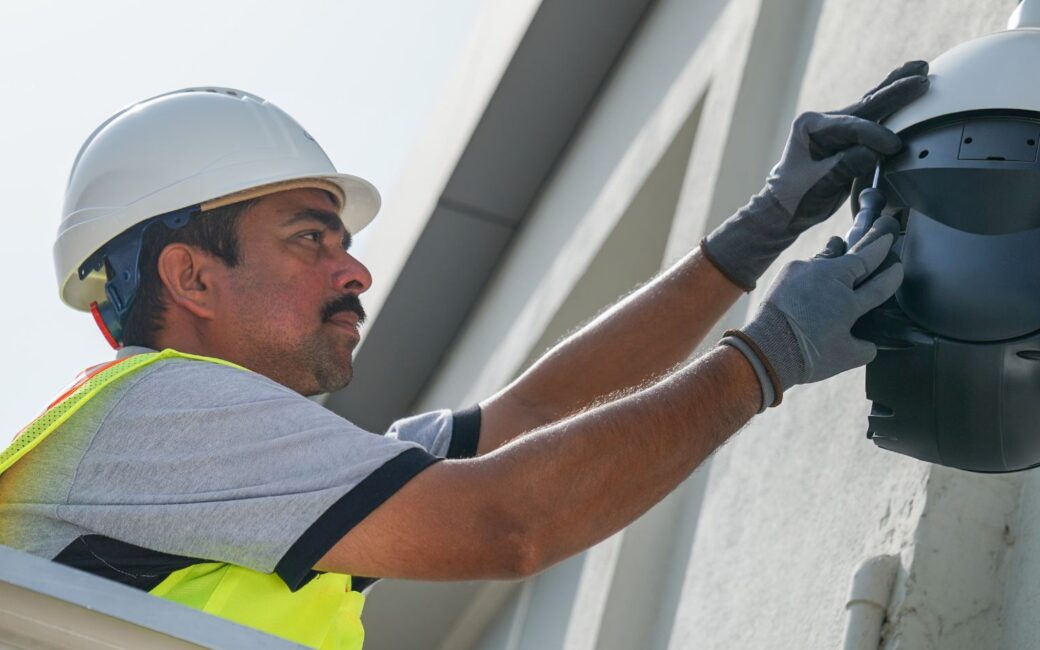
Convergint MEA technical team doing camera installation and maintenance checks

Why security systems fail after handover – and how lifecycle support prevents it

A security system does not face its biggest test on the day it goes live. It faces it after handover, when the site starts to change.

On day one, cameras record, access control responds, operators know the process, and the project team has completed testing and documentation. Everything looks ready.

Then teams change, buildings expand, new areas come into operation, devices age, software needs updates, credentials change, and reports may go unread. A system that worked well at handover can quickly lose performance without active maintenance and support.

For organizations across the UAE, Saudi Arabia, and the wider Middle East and Africa, this matters. In fast-growing and critical environments, security failure can disrupt continuity, safety, compliance, customer confidence, and daily operations.

Handover is not the finish line

Many organizations treat handover as the end of the security project. It should mark the start of long-term operational performance.

During delivery, teams focus on design, integration, testing, and commissioning. After delivery, the focus shifts to uptime, compliance, reporting, training, optimization, and continuous improvement.

A strong handover gives the operations team more than a working system. It gives them documentation, asset lists, training records, warranty details, escalation procedures, maintenance schedules, and clear ownership. Without these, the system may still function, but the customer can lose visibility into performance and risk.

Why systems start to fail after handover

Security systems rarely fail overnight. More often, performance drops gradually. A device goes offline, and no one notices immediately; camera view becomes blocked after a site modification, a door reader starts working intermittently, or a software license gets close to renewal. A sensor begins triggering false alarms because the surrounding environment has changed, and an operator creates a workaround because the system workflow no longer matches how the site actually operates.

Individually, these issues may look small, but over time, they create real operational pressure. As a result of this, operators may lose trust in alerts; response teams may waste time checking false events, managers may struggle to produce accurate reports for audits, and slowly, the gap between the installed system and the live operating environment becomes wider.

Preventative maintenance helps close that gap. It is not only about fixing problems when they appear. It is about finding risks before they interrupt operations. That means checking hardware, reviewing software, testing workflows, validating documentation, reviewing system logs, training users, and planning for upgrades before they become urgent.

The hidden cost of reactive maintenance

Reactive maintenance can seem efficient until something critical fails.

Waiting for a fault may reduce effort in the short term, but it often increases cost and risk later.

  • Emergency repairs usually cost more than planned maintenance.
  • Downtime affects continuity.
  • Replacement parts may not be available immediately.
  • Operators overload.

In mission-critical environments, this approach is especially risky because a camera outage in a cash-handling area, restricted zone, perimeter point, or critical asset location can create a serious blind spot.

Why tailored support matters

No two security environments operate in the same way.

A data center, airport, financial institution, utility site, mixed-use development, and hotel may use similar technologies, but each has different risks, operating hours, compliance needs, response expectations, and growth plans.

That is why maintenance should never follow a one-size-fits-all model.

Convergint MEA tailors maintenance and lifecycle support around each customer’s environment, risk profile, critical assets, and operational priorities. Some customers need frequent preventative maintenance visits, strict response times, and detailed multi-site reporting. Others need focused support for high-risk areas, operator refresher training, planned upgrade roadmaps, or a spare parts strategy that reduces downtime.

The goal is to build a support model that fits the customer’s reality and keeps the system aligned with the business as it changes.

How to prevent performance gaps

Lifecycle planning should begin before handover. During the design and delivery stage, organizations should ask practical questions:

  • Who will own system administration after go-live?
  • How often should teams inspect devices?

  • Which reports need review?

  • How will new users receive training?

  • Which assets carry the highest risk?

  • What response time does each fault type require?

Security leaders also need an accurate asset register. They should know what they have, where it sits, who supports it, what condition it is in, and when it may need refresh or replacement. Without this visibility, lifecycle decisions become reactive, and budget planning becomes harder.

Regular performance reviews also matter. Teams should check whether devices work, but they should also ask whether the system still supports the way the site operates.

Conclusion: Lifecycle support is part of resilience

Technology alone does not create security resilience. Strong resilience comes from good design, integration, operator training, preventative maintenance, clear reporting, and continuous improvement.

For organizations in the region, the message is simple: do not wait for failure to prove the value of maintenance.

Build lifecycle support into the security strategy from the beginning; when teams maintain systems properly, those systems last longer, perform better, support compliance, and give operators more confidence during routine operations and high-pressure events.

Open post
Surveillance in Construction Site

Projects that take years to build: how do you secure long-term infrastructure?

Across the Middle East, giga projects are redefining the scale and ambition of infrastructure development. From new cities and transport networks to industrial zones and mega tourism destinations, these projects take years, sometimes decades, to complete. During that time, the security challenges evolve continuously, raising a critical question: 

How do you secure infrastructure that is still being built?

The security challenge of long-term projects:

Unlike completed facilities, construction and development projects are constantly changing environments. Perimeters shift, access points multiply, and thousands of workers, contractors, and vehicles move in and out every day. Early project phases may involve open land and temporary fencing, while later stages introduce high-value assets, sensitive systems, and critical operations. 

Traditional security models struggle in these conditions. Fixed control rooms are expensive to build, difficult to relocate, and often misaligned with fast-changing project requirements. As a result, security teams face gaps in visibility, delayed response times, and fragmented monitoring across multiple sites. 

For giga projects that span vast areas and long timelines, security must be as flexible and scalable as the project itself. 

How do you establish centralized command across dynamic construction sites?

Effective security for long-term developments requires more than cameras and guards; it demands on-site command and control, real-time intelligence, and the ability to adapt as the project grows. 

This is where a deployable and movable command center becomes essential. 

Instead of building permanent security operations centers at every phase, organizations can deploy a Mobile Security Operations Center (MSOC) that moves with the project, providing consistent oversight from groundbreaking to handover. 

What is a mobile security operations center?

A Mobile Security Operations Center is a fully equipped, modular command-and-control facility designed to be deployed directly on site. It delivers the full functionality of a traditional SOC, without the limitations of permanent infrastructure. 

Inside an MSOC, security teams have access to: 

  • Unified monitoring of CCTV, access control, intrusion detection, and AI analytics 
  • Real-time situational awareness across large and complex sites 
  • Secure IT and power infrastructure with redundancy and resilience 
  • Ergonomic operator workstations designed for continuous operations 

Most importantly, an MSOC can be relocated, expanded, or reconfigured as the project evolves. 

Why mobility matters for multi-year projects

  1. Security that moves with the project

          As construction zones shift and new areas open, the MSOC can be repositioned closer to high-risk zones or newly developed sections, maintaining

          visibility where  it’s needed most. 

  1. Faster deployment, less disruption

          Mobile SOCs can be deployed in weeks rather than months, eliminating the need for repeated civil works and minimizing downtime between project phases. 

  1. Centralized control across multiple sites

           For giga projects with multiple zones or remote locations, MSOCs can operate independently while remaining securely connected to a central command center. 

  1. Long-term cost efficiency

          Instead of building and dismantling multiple permanent control rooms, a single MSOC can support the project across its entire lifecycle. 

Securing infrastructure from groundbreaking to operation

Long-term infrastructure projects don’t just need security at completion; they need protection from day one. A Mobile Security Operations Center ensures continuous command and control throughout construction, testing, commissioning, and eventual operation. 

By combining mobility, advanced technology, and scalable design, MSOCs offer a future-ready approach to securing the world’s most ambitious developments. 

For projects that take years to build, security must be built to last and built to move. 


Open post

Use Case: Enhancing Automotive Operations with Convergint

Automotive illustration with global technology graphic overlay

Convergint, a global leader in service-based systems integration, delivers innovative solutions tailored to meet the needs of entities in industry and government. Convergint has established partnerships with multiple companies in the automotive sector with a focus on enhancing manufacturing processes, improving operational efficiency, and optimizing security. This use case details Convergint’s collaboration with a global leader in the automotive industry, highlighting how technology, embedded resources, and program management have supported their success.

It all began with the alignment of values and culture between Convergint and this industry leader, who shares a commitment to excellence, innovation, and sustainability. These common values continue to facilitate trust, reinforce the relationship, and enhance the effectiveness of Convergint’s service and solutions delivery.

Review this use case to learn how Convergint’s innovative solutions can drive success in the automotive sector.


View the case study here.

Download Full Case Study


Learn more.

Contact an expert today to learn how Convergint’s innovative solutions can help safeguard an organization’s assets and operations against emerging security threats.

Contact Us

Effective security and safety is a multi-layered approach involving people, processes, and technologies. Convergint-provided products and services are only one part of this multi-layered approach, will not detect or prevent all threats or solve every risk, and should not be your sole method of security or safety. Please see the “IMPORTANT PRODUCT SAFETY AND SERVICE INFORMATION” documentation, available at www.convergint.com/terms, prior to using a Convergint-installed system.

Open post

Use Case: AI and Video Analytics Enhance Operational Efficiencies and Security for the Shipping Industry

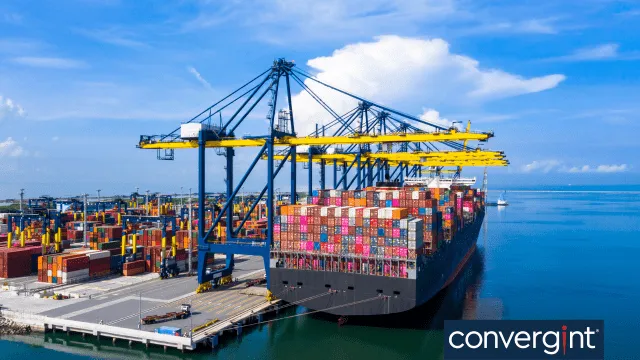
Shipping containers being loaded onto a ship at port

Convergint’s Smart Vessel solution integrates artificial intelligence and video analytics to enhance both operational efficiencies and security in the shipping industry. Through advanced technologies such as AI, machine learning, and intelligent surveillance, the solution provides real-time threat detection, predictive maintenance, cargo monitoring, fuel efficiency optimization, compliance with maritime regulations, and improved employee safety.

Review this use case to learn how Convergint’s Smart Vessel solution is leveraging these innovations for a positive impact on safety, efficiency, and profitability within the shipping sector.


View the use case here.

Download Full Use Case


Learn more.

Contact an expert today to learn how Convergint Federal can provide top-notch security solutions for federal agencies, reducing risks, and ensuring robust infrastructure.

Contact Us

Open post
Early detection in every environment.

New Convergint Study Reveals Critical Need for Increased Collaboration Between Physical Security and Information Technology Teams

Businessman holding a tablet and pen connecting circular icons that represent people

First Annual Benchmarking Report Finds That Despite Technology Advancement, 63% of Physical Security Professionals Are Not Involved Cybersecurity Strategy

Convergint, a global leader in service-based systems integration, today announced the results of its first annual Voice of the Customer Benchmarking Survey, which revealed that the role of physical security professionals has grown increasingly complex, now requiring intensive IT skills in areas like cybersecurity and cloud computing. The survey found that 72% of physical security professionals anticipate that their roles within their organizations will change in the next 1-2 years–with an increased emphasis on emerging technology, including artificial intelligence and machine learning, mobile credentialing, and autonomous solutions. The elevated status of physical security is also evident. Indeed, 35% of survey respondents noted that they report directly to the CEO or other c-level executives, demonstrating how physical and electronic security and risk management are now an organizational and strategic importance.

“There’s no doubt that the role of the physical security professional is changing–the traditional idea of a ‘security guard’ is being re-defined, so as security equipment and capabilities advance, the job has become more complex and tech-centric,” said Robert Van den Heuvel, Business Intelligence Manager, Convergint. “Business leaders must look at security and risk holistically and break down the siloes that exist between cyber and physical security systems—and the teams that lead them—to drive collaboration and keep their people and assets safe.”

Recognizing the absence of peer-to-peer benchmarking in the physical security industry, Convergint Research & Insights conducted its first Voice of the Customer Benchmarking Survey in late 2022—analyzing information from senior, global physical security professionals at the director and vice president level, at more than 70 of the largest industry leading organizations across healthcare, financial services, government, and utilities, among others. The report provides insights on staffing and organizational structure, budgeting and procurement, and trends in innovation and technological adoption.

Key survey findings revealed several areas of opportunity for security teams across all industries, including:

  • Cloud is critical: More than 51% of security respondents reported that they don’t fully understand their organization’s current cloud strategy. Cloud management must be a top priority for all security leaders, and involvement and collaboration between IT and physical security teams must be accelerated to reduce vulnerabilities from cloud devices.
  • Cybersecurity shouldn’t be limited to IT: Only 4% of physical security teams are leading cybersecurity initiatives for their respective organizations, with another 28% teaming up with IT. 63% of respondents noted that they are not involved at all in cybersecurity at their organization. Coordination between IT and physical security teams is critical to prevent attacks on cameras, sensors, and other mission-critical devices.
  • Defining ROI to demonstrate business value: 44% of survey respondents cited their innovation focus as utilizing data and technologies to reduce labor expenses and optimizing workflows and processes–however very few respondents were able to describe how they measure success for innovation projects. There is an opportunity for physical security teams to demonstrate broader business value–from conversations around office and real estate footprint, to office utilization to ensuring a safe work environment.

“The workplace has evolved dramatically over the last few years, resulting in a greater emphasis on health and safety,” said Van den Heuvel. “This is a watershed moment for our industry, given the advanced data that security systems can collect and analyze–physical security is now a highly technical role, focused on managing highly complex systems. By empowering these professionals with proper training and resources and prioritizing cross-team collaboration, security systems can provide tangible business value, in the short- and long-term.”

Download the Survey


About Convergint

Convergint is a $2.0 billion global, industry-leading systems integrator that designs, installs, and services electronic security, cybersecurity, fire and life safety, building automation, and audio-visual systems. Listed as the #1 systems integrator in SDM Magazine’s Top Systems Integrators Report for the past 5 years, Convergint leads with over 9,000 colleagues and more than 185 locations worldwide. To learn more about Convergint, visit www.convergint.com.

Contact Us